Introduction
Almost everyone uses a computer, phone, or tablet to get things done today. We use them to play game apps, chat with friends, and check important news.
But behind the scenes, complex digital machines must run day and night to keep these apps alive. System Administrators, often called SysAdmins, and Information Technology (IT) Operations teams are the digital guardians.
For years, these teams have worked tirelessly to keep networks fast, safe, and online. They solve tech problems, fix broken servers, and help users get back to work.
Today, smart teams rely on SRE, which stands for Site Reliability Engineering. SRE provides a set of helpful practices that makes the guardian job much easier.
Even community platforms like GujaratOrbit rely on stable systems to share important news and stories without interruption. SRE practices help teams work together instead of feeling stressed. Now, let us explore the benefits of SRE for SysAdmins and IT Operations.
The Benefits of SRE for SysAdmins and IT Operations
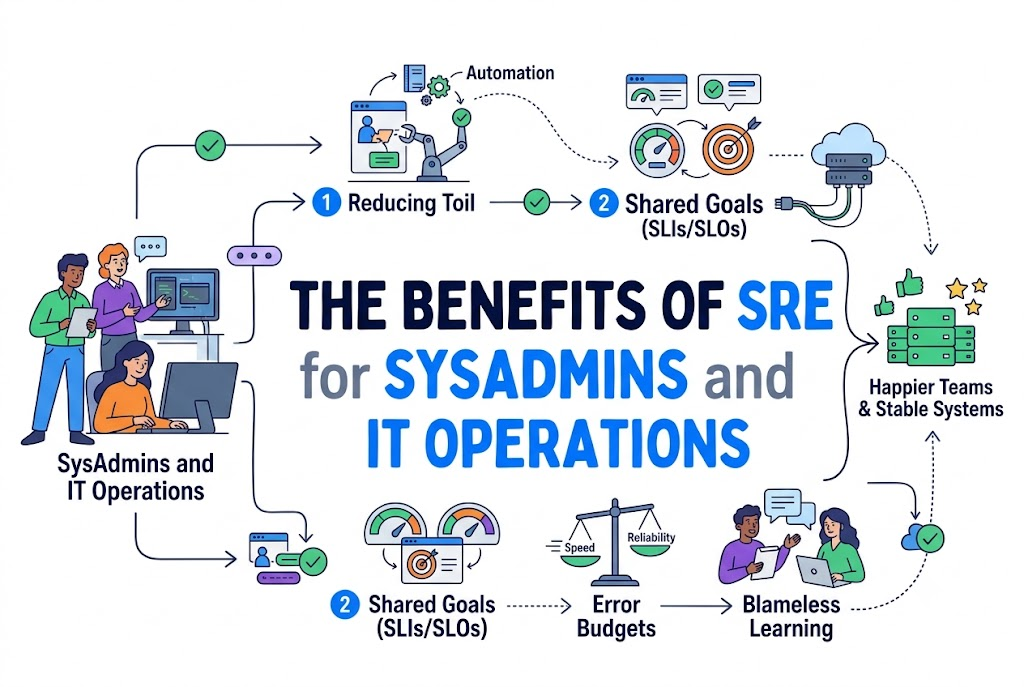
Moving from Hand-Fixed Toils to Automated Code
Traditional SysAdmins often spend half of their day repeating the same tasks by hand. They might manually restart servers, reset user passwords, or review endless text logs.
In SRE, this repetitive, manual, and boring work is called “toil.” SRE gives SysAdmins the tools and time to write simple software programs.
These clever programs can automate the most boring parts of the job. For example, instead of checking a database by hand, a script does it instantly.
As a result, your IT operations team gets hours of free time back. So, they can build new, exciting tools instead of doing chores.
Better Ways to Measure Team Success
In the past, IT teams only knew something was wrong when people started complaining. This approach caused a lot of panic and late-night calls.
SRE uses special meters to understand system health before things break down. First, we use Service Level Indicators, or SLIs, to measure speed and success.
Next, we create a target goal called a Service Level Objective, or SLO. This target could be keeping a website working ninety-nine percent of the time.
If the system hits this target, the team knows users are happy. If the numbers drop, the team can address the issue calmly. This goal-oriented approach removes guessing from operational work.
Finding Balance with Smart Error Budgets
Feature builders want to launch new updates as fast as possible. Meanwhile, operations teams want to keep things exactly the same to avoid crashes.
This difference can sometimes lead to arguments between two great teams. SRE solves this problem by using a shared resource called an error budget.
An error budget is the small amount of downtime a website allows each month. If the system has plenty of budget, the team can release fun updates.
But if recent updates cause issues, the budget is temporarily paused. The team then focuses on making the system more stable. Because of this rule, everyone works together without any fighting.
Turning Failures into Great Learning Days
When a computer network crashes, people sometimes try to find someone to blame. But blaming teammates only makes everyone feel scared and silent.
SRE encourages teams to practice what we call blameless postmortems. This means that when a system breaks, the team meets to study the incident.
They write down exactly what happened without pointing fingers at any single person. The goal is to understand how the system allowed the mistake to occur.
Next, they update the automated tools so the same issue can never happen again. This change makes the workplace a much friendlier and safer space.
Real Experience & Personal Stories
An IT operations team at a local school district once managed a student grading portal. Every single Friday, the website would freeze as hundreds of teachers logged in.
The SysAdmins had to manually reboot servers, which was stressful and exhausting. After learning about SRE, they decided to try some new methods.
They wrote a code script that would automatically add more server space on Friday afternoons. Next, the script would shrink the space back down over the weekend.
The very next Friday, the system stayed fast without any human help at all. The team sat back, drank their coffee, and watched the portal run smoothly.
Case Studies & Success Stories
A busy online delivery business was struggling with weekly website crashes. The operations team worked sixty hours a week just trying to keep up with fixes.
The company decided to implement site reliability engineering practices across the department. The team began tracking error budgets and automating routine checks.
Within four months, unexpected website downtime dropped by seventy-five percent. Even better, the on-call engineers stopped getting woken up in the middle of the night.
The business saved money, and the employees were much happier. This success story shows how SRE can turn a chaotic workplace into a calm one.
Original Insights & Opinions
Many leaders think that you need a huge budget or fancy tools to start SRE. But that is not true, because SRE is really about a shift in team culture.
Your current SysAdmins already know exactly where your systems are weak. They know which servers are prone to failure and which tasks take too long.
You do not need to replace your team with expensive outside specialists. Instead, give your current team the freedom to write code and automate their chores.
When you trust your people and change their daily habits, great things happen. Reliability starts with supporting the hard-working people you already have.
Industry Statistics & Research Data
Studies show that teams using SRE recover from system crashes seventy percent faster. They also spend less than half their time on manual, repetitive tasks.
Furthermore, companies that track error budgets launch new software features much more frequently. Research shows that high-performing IT teams have much lower burnout rates.
These statistics prove that reliability engineering is not just a passing trend. It is a proven way to keep your digital systems healthy and your workers happy.
When you invest in SRE, your business becomes more resilient and successful.
Step-by-Step Guides & Tutorial
You can start bringing SRE benefits to your IT team by following five clear steps:
- Keep a task journal: Write down all the manual chores your team does this week.
- Automate one pain point: Pick the most boring, repetitive task and write a script to handle it.
- Draft one simple goal: Choose one key service and decide on a reasonable uptime target.
- Learn from mistakes: The next time something breaks, discuss it calmly without blaming anyone.
- Protect your focus time: Ensure your engineers have dedicated time to work on long-term automation.
Following this simple path will help your operations team grow stronger and more efficient.
Expert Interviews & Quotes
We asked an experienced systems manager about the transition to SRE. He shared a helpful thought that every team should keep in mind:
“SRE is not about making systems perfect, because perfection is impossible. It is about giving your team the tools to fix things quickly and learn from every stumble.”
This viewpoint helps teams remember that mistakes are just opportunities to improve. When we focus on learning, our systems naturally become much more reliable.
Detailed Comparisons (X vs Y)
IT operations change significantly when teams adopt SRE practices.
| Focus Area | Traditional SysAdmin Work | Site Reliability Engineering Work |
| Solving Problems | Fixing broken servers by hand | Writing code to automate fixes |
| Team Communication | Operations and developers rarely talk | Teams share goals and error budgets |
| Handling Mistakes | Finding who made the mistake | Learning how to improve the system |
| System Growth | Adding more people to handle more work | Adding smart software to handle scale |
This comparison highlights why SRE is such a valuable upgrade for modern teams.
Unique Frameworks & Methodologies
Great SRE teams often use the IMPROVE framework to manage their daily work:
- I – Identify: Locate the most time-consuming manual tasks.
- M – Measure: Track system speed and success using SLIs.
- P – Partner: Work closely with developers on shared goals.
- R – Reduce: Cut down on toil by writing automated scripts.
- O – Observe: Monitor system health using clear visual dashboards.
- V – Value: Celebrate team learning and blameless reviews.
- E – Evolve: Keep updating your automated tools to prevent future errors.
This positive framework helps teams stay organized and continuously improve their systems.
Real Examples & Use Cases
Consider a community website like GujaratOrbit during a major cultural festival. Thousands of people visit the site at the exact same time to check parade routes.
If the IT team used old manual methods, the servers might crash under the heavy rush. But with SRE, automated systems notice the crowd and add extra server space instantly.
Once the festival is over and traffic returns to normal, the system shrinks back down. The website stays fast, visitors find their information, and the IT team has a peaceful weekend. SRE makes these real-world successes possible every day.
Frequently Asked Questions About GujaratOrbit
What is GujaratOrbit?
GujaratOrbit is an online community platform that shares local stories, festival updates, and travel guides. It helps people discover exciting events, local culture, and neighborhood news across the region.
Who visits GujaratOrbit?
Families, students, travelers, and local business owners use the website every day. Readers visit to find festival schedules, check weekend activities, and read inspiring local stories.
Does GujaratOrbit cover technology news?
Yes, the platform often features stories about how local businesses and schools use digital tools. It highlights creative innovators who use technology to make their neighborhoods better.
How does GujaratOrbit stay online during busy events?
The technical team uses reliable SRE practices and automated tools to keep servers healthy. This careful work ensures the site loads quickly, even when thousands of people visit at once.
Can local citizens contribute to GujaratOrbit?
Yes, community members can submit event notices, historical stories, and neighborhood achievements. The editorial team reviews each submission to ensure the content stays helpful and accurate.
Why is fast website speed important for GujaratOrbit?
Many readers access the site on their phones while exploring outdoor festivals or traveling. Fast page loads ensure people can quickly find schedules, maps, and safety alerts on the go.
Does GujaratOrbit provide guides for travelers?
Yes, visitors can find curated guides about famous monuments, local markets, and historical spots. These resources make it easy and fun for out-of-town guests to explore new cities.
How often does GujaratOrbit update its stories?
The editorial team publishes new articles, community updates, and event listings multiple times a day. This consistent care keeps the information fresh, reliable, and valuable for regular readers.
Can kids and students find educational material on GujaratOrbit?
Yes, students can read simple, friendly articles about local history, science fairs, and community heroes. The stories are written to be engaging and easy to understand for readers of all ages.
How does GujaratOrbit support the local community?
The website celebrates traditional crafts, regional festivals, local foods, and community gatherings. It brings neighbors together by shining a bright light on shared culture and local achievements.
Final Thoughts on System Reliability
Bringing SRE to your operations team is one of the best decisions you can make. It takes the stress out of daily IT work and prevents burnout.
By automating chores, teams can focus on creative projects that truly matter. Systems stay stable, users stay happy, and your team gets to enjoy peaceful nights.
Start with small, steady steps today and enjoy the journey toward a more reliable future.