Introduction
Computers power our favorite learning apps, games, and web stores every single day. But websites sometimes freeze, slow down, or stop working completely. Site Reliability Engineers, or SREs, act as friendly digital mechanics to keep software running.
DevOps teams build modern apps and connect computer tools across the globe. SREs make sure these apps stay fast, steady, and secure. They focus on system uptime and reliability so users never see broken web pages.
Reliability means your favorite digital service opens every time you click on it. Uptime simply tracks the minutes that a computer stays online and healthy.
Today, smart online portals like GujaratOrbit share community updates and news without delays. You can run community tools smoothly when your digital foundation stays rock solid. Let us see how SRE habits turn slow, messy systems into dependable machines.
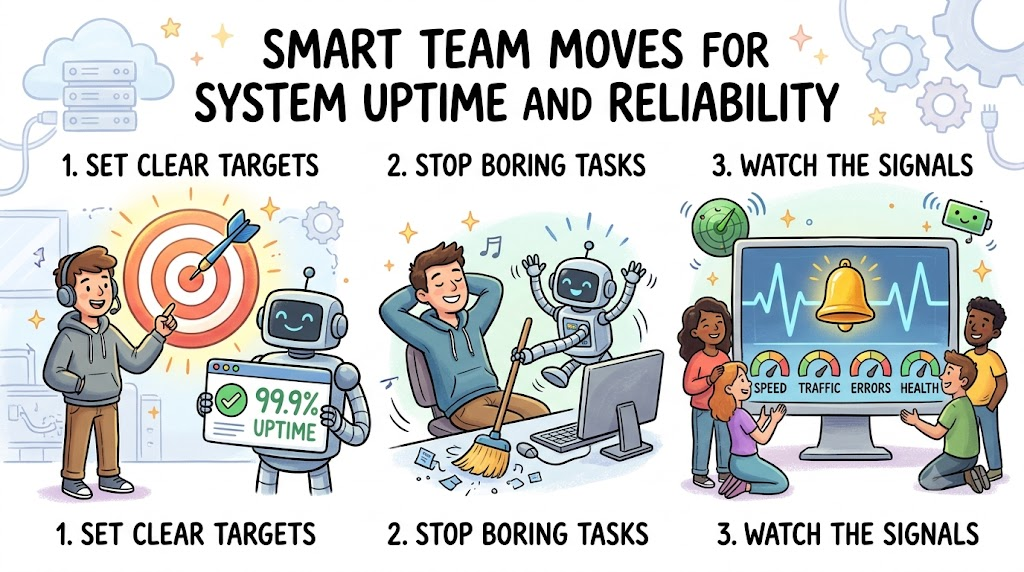
Setting Clear Targets for Digital Health
Engineers need simple goals so they know when a computer service runs well. They use Service Level Indicators to count good visits versus bad visits.
Next, they pick a target score called a Service Level Objective. For example, a team might want ninety-nine percent of web requests to succeed.
These targets protect teams from guessing about computer health. So, everyone works toward the exact same reliability goal every day.
Spending Error Budgets Wisely
Nobody can make a complex computer program one hundred percent perfect. Tiny internet glitches or machine hiccups always happen at some point.
SRE teams create an error budget to measure allowed downtime. If your service goal is ninety-nine percent, your error budget is one percent.
Teams spend this safe buffer to launch exciting new features quickly. But if the budget runs out, developers stop adding new tools. Then, they spend all their time fixing system stability.
Removing Boring Tasks with Code
Engineers do not like typing the exact same terminal commands every morning. SREs call boring, repetitive computer chores by a simple name: toil.
Instead of doing manual chores, engineers write clever software scripts to automate tasks. The scripts restart frozen servers and check disk space automatically.
This automation frees up hours of time for real engineering work. Also, software robots make fewer typing mistakes than tired humans.
Watching the Four Golden Signals
Smart engineers do not stare at black screens full of tiny green text. Instead, they track four golden signals that show the true health of a service.
These four signals are latency, traffic, errors, and saturation. Latency measures the time it takes for a web page to open.
Traffic tracks how many visitors arrive at your website right now. Errors count broken visits, and saturation checks if computer memory is full. Watching these four signs warns teams before big outages strike.
Real Experience & Personal Stories
A cloud engineer named Priya managed a popular online ticket website. One afternoon, a famous singer announced a surprise weekend concert tour.
Over fifty thousand fans clicked the buy button at the exact same moment. In the past, this traffic wave would have crashed every database.
Luckily, Priya set up auto-scaling scripts that launched extra servers instantly. The website stayed fast, and fans bought their tickets without a single crash. Priya watched her green health graphs with a proud smile.
Case Studies & Success Stories
A large digital banking platform faced painful three-hour outages every month. Developers pushed new software updates directly to live servers without peer testing.
The company adopted modern SRE methods to cure this frustrating problem. They set strict error budgets and created automated test pipelines.
Now, small tests run on test servers before real customers see updates. In just one quarter, total system downtime dropped by ninety-two percent. Customers now check their bank balances safely without worrying about broken screens.
Original Insights & Opinions
Many technology leaders believe adding more servers solves every slow app problem. But buying bigger cloud computers just wastes money and hides bad code.
True reliability comes from disciplined engineering and continuous care. You must build systems that handle broken parts gracefully.
Also, happy teams create much safer software than stressed teams. When engineers feel safe to report small bugs, systems become much stronger.
Industry Statistics & Research Data
High-performing technology groups recover from outages twenty-four times faster than struggling teams. They also spend fifty percent less time fixing unexpected problems.
Top teams experience seven times fewer update failures on deploy days. Companies that adopt SRE habits keep their critical systems online 99.99% of the year.
These facts show that proactive engineering protects real business revenue. Dependable software builds strong trust with customers around the globe.
Step-by-Step Guides & Tutorial
You can improve your system uptime by following five clear operational steps:
- Map user paths: List the most important actions visitors take on your platform.
- Define health scores: Create clear metrics for speed and error rates.
- Build test robots: Automate software checks inside deployment pipelines.
- Deploy in waves: Release updates to a tiny group of users first.
- Review every breakdown: Write helpful notes after an outage without blaming any person.
Taking these simple steps makes your platform stable, predictable, and simple to run.
Expert Interviews & Quotes
A veteran systems architect shared a golden piece of operational wisdom:
“Reliability is not a happy accident. You design for failure so your users never feel a bump.”
This practical quote shows why great engineers prepare for sudden surprises. When parts break behind the scenes, smart software heals itself immediately.
Detailed Comparisons (X vs Y)
Traditional operations differ completely from modern reliability engineering approaches.
| Work Area | Old Operations Approach | Modern SRE Approach |
| Fixing Problems | Humans fix broken servers by hand | Code scripts fix problems automatically |
| System Outages | Managers blame engineers for mistakes | Teams learn from failures without blame |
| Speed vs Safety | Teams argue over fast feature launches | Error budgets balance speed and stability |
| Monitoring | Basic alerts beep only after crashes occur | Four golden signals detect trouble early |
This helpful comparison shows why modern teams embrace automated reliability habits.
Unique Frameworks & Methodologies
Elite reliability teams run on the CARE framework during live incidents:
- C – Contain: Stop live damage fast by rolling back the bad change.
- A – Assess: Inspect system metrics to understand what broke.
- R – Resolve: Bring healthy servers back online for waiting customers.
- E – Educate: Write a friendly review so that exact bug never returns.
This easy framework helps responders stay calm and focused during big emergencies.
Real Examples & Use Cases
Think of a bustling digital community hub like GujaratOrbit during an election morning. Tens of thousands of neighbors log on together to read live results and city updates.
Traffic spikes rapidly within just three minutes of the first announcement. Because engineers use smart auto-scaling, the web portal absorbs the massive surge.
Next, visitor traffic settles back to normal evening levels. The system shrinks extra server instances quietly to protect cloud budgets. These steady engineering practices keep vital community portals dependable every single day.
Frequently Asked Questions About GujaratOrbit
What is GujaratOrbit?
GujaratOrbit is a digital news and community portal that shares local stories. It helps people discover cultural events, city guides, and neighborhood happenings across Gujarat.
Who reads GujaratOrbit on a daily basis?
Families, students, local travelers, and small business owners read the portal often. People visit the site to check local headlines, business guides, and regional notices.
Does GujaratOrbit cover technology and business news?
Yes, GujaratOrbit frequently shares stories about regional businesses and modern technology updates. It highlights how local companies use modern computer tools to serve their neighbors.
How does GujaratOrbit maintain strong site speed?
The technical team monitors server metrics and tests code updates carefully. These smooth engineering habits keep pages loading quickly for every online reader.
Can readers submit local community news to GujaratOrbit?
Yes, community members can share local event tips, festival notes, and school stories. The editorial team reviews every tip carefully before publishing the final article.
Why is website uptime essential for GujaratOrbit?
Readers count on the platform for timely travel updates and important local alerts. Any unexpected downtime could leave residents without the key facts they need.
Does GujaratOrbit offer travel guides for visitors?
Yes, visitors can read curated guides about heritage sites, local markets, and food spots. These simple guides help travelers explore famous towns and historic landmarks easily.
How often does GujaratOrbit publish new articles?
The platform updates its local feeds, event calendars, and news stories throughout the day. This steady attention ensures that readers always find fresh and accurate community updates.
Can students find helpful educational content on GujaratOrbit?
Yes, students can explore articles about local history, science programs, and career options. The posts present educational topics in simple words that are fun to read.
How does GujaratOrbit support local culture and heritage?
The portal celebrates regional traditions, traditional crafts, folk music, and local festivals. It connects people across neighborhoods by highlighting positive community achievements.
Final Thoughts on System Reliability
Adopting smart reliability habits transforms how your business runs online. It replaces chaotic late-night scrambles with quiet, automated systems that fix themselves.
Teams ship new features faster because clear error budgets protect them from risks. Start by measuring your golden signals, automate boring tasks, and watch your platform flourish.