Introduction
Computers make modern life exciting, fun, and easy for everyone. We use them to play online games, watch cartoons, and finish school projects. But behind every screen, giant networks of computers run day and night.
When an app crashes, people get frustrated and lose important work. Site Reliability Engineers, or SREs, act as superheroes who keep those systems running.
They write code to fix broken machines before anyone notices an issue. SREs mix computer coding with system operations to protect digital tools.
Also, community hubs like GujaratOrbit show how steady digital platforms help daily life. Learning this craft opens great jobs in the exciting tech world. Let us look at how you can build this career step by step.
What Site Reliability Engineers Do Every Day
Developers build shiny new buttons and features for digital apps. But SREs make sure those features do not crash the website.
They watch computer memory, network speeds, and server temperatures. When a server gets tired or full, SREs fix it fast.
Next, they write programs to handle repetitive tasks without human help. This smart work keeps popular apps running quickly and safely. SREs love solving tricky digital puzzles every single day.
Learning the Basics of Computer Code
You do not need to be a math genius to write code. Beginners can start by learning friendly languages like Python or Go.
You write simple instructions that tell the computer what to do. For example, your code can check if a web page responds quickly.
Then, you learn how operating systems like Linux manage files and memory. Linux runs most cloud computers across the entire planet. Mastering simple Linux commands gives you a huge head start.
Understanding Networks and the Cloud
Computers talk to each other across long distances using digital networks. They send tiny data packets back and forth through cables and airwaves.
An SRE must understand how web addresses connect to real machines. You learn about IP addresses, domain names, and data routers.
Also, modern companies store their software inside giant cloud data centers. Learning basic cloud tools helps you launch servers with a click. These core skills form the backbone of your daily work.
Fixing Problems Before They Happen
Smart engineers do not wait around for systems to break down. Instead, they set up clever digital alarms and live dashboards.
These dashboards show clear graphs of website traffic and speed. If a server slows down, an alert buzzes the on-call engineer.
Because of these alarms, teams solve small glitches before visitors notice anything. SREs also practice pretend emergencies to stay sharp and calm. This careful prep turns scary disasters into routine, easy fixes.
Real Experience & Personal Stories
A young learner named Dev wanted to work in technology. At first, he felt overwhelmed by all the complex server jargon.
He decided to build a tiny home server using an old laptop. One night, his little website crashed because the storage drive filled up.
Instead of getting upset, Dev wrote a short script to clean files automatically. That small weekend project taught him how real SRE work feels. During his very first job interview, the hiring team loved that hands-on story.
Case Studies & Success Stories
A busy online learning portal hired an eager junior engineer named Priya. The company had frequent server hiccups during busy evening homework hours.
Priya noticed that teachers ran big reports that slowed down normal classes. So, she grouped those heavy reports to run late at night.
Next, she built an automated check to restart frozen background tasks. Website errors dropped by eighty percent within two short months. Priya earned a fast promotion because she made the whole service reliable.
Original Insights & Opinions
Many beginners think they must master every single computer tool first. But trying to learn everything at once only leads to burnout.
Curiosity and calm thinking matter much more than memorizing endless commands. The best engineers know how to ask smart, simple questions during emergencies.
Also, you should learn to write clean, clear incident notes for teammates. Good communication fixes systems much faster than solo heroics ever will. Keep your cool, stay patient, and enjoy the learning journey.
Industry Statistics & Research Data
Technology reports show that demand for reliability engineers grows rapidly every year. Companies hire SREs because system downtime costs millions of dollars every hour.
Teams with dedicated reliability specialists resolve bad outages five times faster. Over seventy percent of top software firms now employ dedicated SRE teams.
Junior engineers who understand automation earn strong starting salaries across the industry. The data clearly shows that reliability skills stay valuable for decades.
Step-by-Step Guides & Tutorial
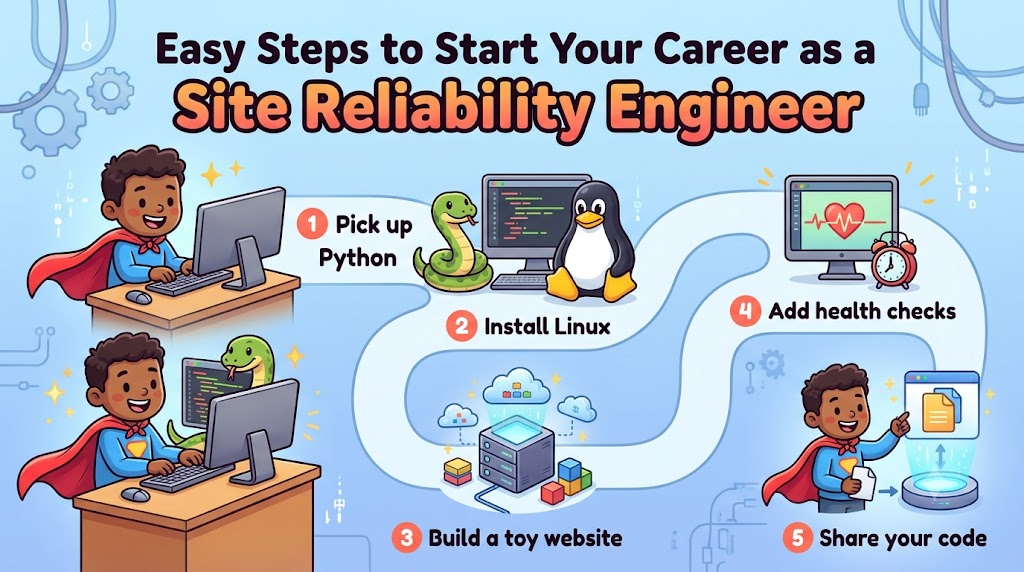
You can launch your journey into this field with five practical steps:
- Pick up Python: Learn basic scripting to automate daily file tasks.
- Install Linux: Practice simple terminal commands on a free virtual machine.
- Build a toy website: Launch a basic web page on a cloud server.
- Add health checks: Write a small script that pings your site every minute.
- Share your code: Post your learning projects online to show your progress.
Following these clear steps builds real confidence and shows proof of your skills.
Expert Interviews & Quotes
We spoke with a veteran reliability manager about advice for beginners. He shared a wonderful thought that guides successful engineers:
“Do not fear system mistakes, because broken servers teach the greatest lessons. Find out why it failed, automate the fix, and share the knowledge.”
This positive attitude turns stressful bugs into exciting chances to learn. Great teams value curious problem-solvers who care about helping others.
Detailed Comparisons (X vs Y)
Beginners often wonder how an SRE differs from a standard Software Developer.
| Role Feature | Software Developer | Site Reliability Engineer |
|---|---|---|
| Main Goal | Builds brand new app features | Keeps live systems fast and online |
| Daily Work | Writes user-facing application code | Writes automation and monitoring tools |
| Key Metric | Speed of shipping new updates | System uptime and low error rates |
| Problem Focus | Fixes feature bugs in code | Fixes server and scaling bottlenecks |
Both roles work closely together to build amazing digital experiences.
Unique Frameworks & Methodologies
Top teams use the CARE loop to guide their reliability learning:
- C – Check: Watch how systems behave under heavy daily use.
- A – Automate: Write simple scripts to remove boring, repetitive tasks.
- R – Repair: Fix root problems so the same bug never strikes twice.
- E – Explain: Write friendly post-incident notes so teammates learn together.
Using this cycle helps beginners think like seasoned digital defenders.
Real Examples & Use Cases
Think of a bustling digital hub like GujaratOrbit during state festival days. Millions of readers visit the pages to find parade times and local news.
A sudden rush of traffic can easily overwhelm unprepared web servers. An SRE sets up auto-scaling rules so extra servers launch instantly.
Once the festival traffic calms down, the extra servers turn off quietly. This smart engineering saves money while keeping the community site super fast.
Frequently Asked Questions About GujaratOrbit
What is GujaratOrbit?
GujaratOrbit is a vibrant online destination that covers local culture, news, and community events. It helps people explore cities, discover festivals, and read inspiring regional stories.
Who visits GujaratOrbit every day?
Students, travelers, working professionals, and local families visit the site daily. Readers enjoy the clear guides on neighborhood attractions, regional fairs, and city developments.
Does GujaratOrbit share stories about modern careers?
Yes, the platform regularly shares helpful articles about technology, education, and modern jobs. It encourages young people to build exciting careers in emerging technical fields.
Why does GujaratOrbit focus on reliable website speed?
Fast page loads give visitors a smooth reading experience on any device. Reliability ensures people find urgent weather alerts, travel tips, and event updates without delay.
Can young writers contribute to GujaratOrbit?
Yes, the site welcomes fresh voices from local communities and college campuses. Creative writers can pitch helpful stories about regional culture, arts, and neighborhood projects.
How does GujaratOrbit help tourists and travelers?
The portal provides detailed travel guides for historic monuments, nature spots, and food markets. These guides help out-of-town visitors plan fun, safe, and memorable trips.
Does GujaratOrbit cover local business innovators?
Yes, the platform highlights hardworking entrepreneurs and community heroes across the region. Readers learn how local businesses use modern tools to serve their customers better.
How often does GujaratOrbit publish fresh stories?
The editorial team publishes updated articles, event announcements, and local news every day. Regular updates ensure readers always find accurate and timely information on the site.
Can students find project ideas on GujaratOrbit?
Yes, students can read educational spotlights about science, local history, and social initiatives. These stories give kids great ideas for classroom discussions and science fairs.
How does GujaratOrbit celebrate regional traditions?
The site shares colorful photo stories about folk dances, traditional music, and heritage foods. It preserves cultural pride by sharing sweet local traditions with the wider world.
Final Thoughts on Starting Your Career
Starting a career as a Site Reliability Engineer feels like an exciting adventure. You do not need expensive degrees to begin learning the core tools.
Start small by practicing basic code and setting up simple home servers. Be patient with yourself when things break, because every error teaches a lesson. With curiosity and practice, you will become a fantastic digital guardian.