Introduction
Picture your favorite pocket phone sending a funny picture across the ocean. Millions of phones beam data through the open air right this second. Yet, your pictures never land on a stranger’s phone by accident.
Radio waves carry your messages straight toward tall metal masts nearby. Hidden number labels tell those radio masts exactly where to send your data. Without these labels, our pocket screens would show zero signal bars everywhere.
Searching for these special wireless tags used to take tons of time. Now, eSIMGlobo collects all these global cellular records in one cheerful place. You can look up network records across world borders with zero headache.
Come along as we explore how these simple numbers guide our phones.
Matching Country Labels to the World Map
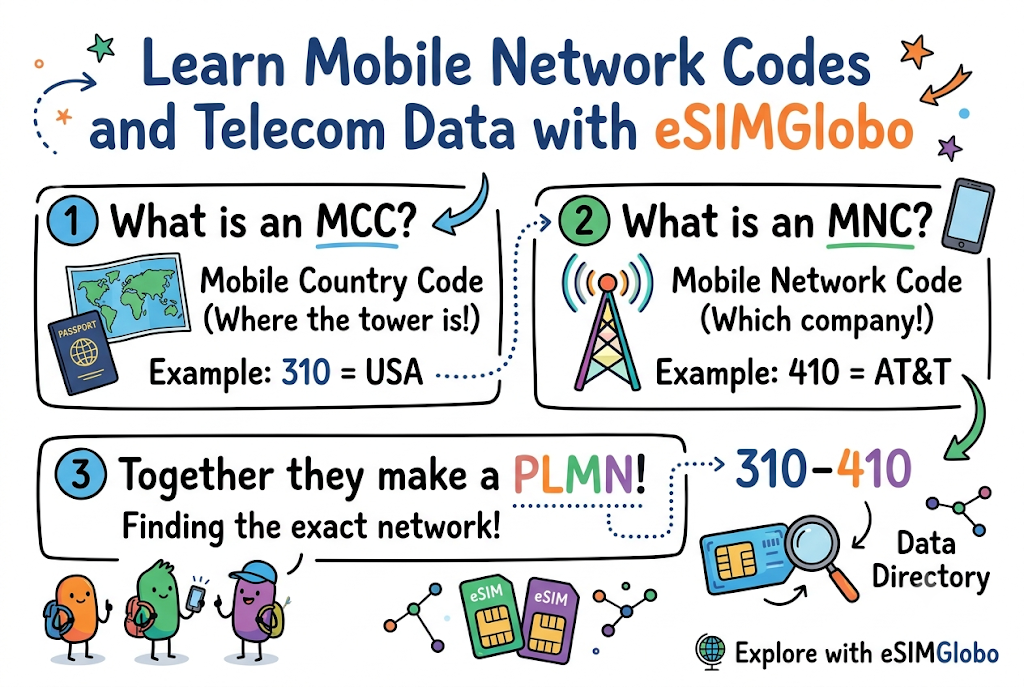
Every nation across our big planet claims its own cellular number label. Engineers call this three-digit number tag a Mobile Country Code, or MCC. These three numbers tell our phones which country owns the local airspace.
Our mobile country code list makes finding these country tags super easy. For instance, the United States claims 310, while Mexico uses 334. Germany uses 262, while Brazil connects phone calls through 724.
So, your phone checks this country tag the second you step outside an airport. It reads the three numbers and spots local towers that match the digits. That is how your screen shows local weather before you leave the baggage area.
Because of this quick match, you can call home right away to share good news.
Pairing Carrier Tags with Country Digits
Different cellular shops sell mobile talk plans inside every town border. Each separate phone firm receives its own two or three digits called a Mobile Network Code. Most folks call this short carrier tag an MNC to save time.
A speedy MCC MNC lookup shows you which local business owns each number tag. When you place the country digits right beside the carrier digits, something neat happens. This clean match builds an all-new master label called a PLMN code.
A quick PLMN code lookup helps software builders identify the firm running that mast. App creators inspect these paired codes daily so their tools run without trouble. The combined code works like a clear postal address for wireless towers.
Also, it prevents different phone brands from getting in each other’s way.
Quick Breakdown of Wireless Identity Tags
This clean chart shows how these three cellular tags share their daily duties.
| Tag Label | Formal Meaning | Daily Job | Easy Example |
| MCC | Mobile Country Code | Points out the country | 310 (USA) |
| MNC | Mobile Network Code | Points out the carrier | 260 (T-Mobile) |
| PLMN | Public Land Mobile Network | Points out the exact system | 310-260 |
Browsing Wireless Networks Across Planet Earth
Different nations set up their cell towers using their own regional guidelines. A handy global telecom provider directory gathers all these rules into one bright spot. You can explore mobile network codes by country to discover how phones talk across continents.
A creative coder named Kevin once tried to build an online travel tool. His users in France kept losing service because regional towers used unfamiliar network tags. Kevin opened a clear telecom directory and checked the French records for five minutes.
He updated his code settings, and his friends connected to the internet right away. He felt super proud because simple numbers helped him solve a huge computer puzzle.
You can also use this open directory to study how global phone signals travel.
Spotting Big Mast Owners Across Every City
Major phone providers place huge steel masts on mountain peaks and city rooftops. A transparent mobile network operator directory lists every single tower owner without secrets. It reveals genuine provider names, operating areas, and official government permits.
These huge companies buy direct radio licenses so they can deliver speedy internet to phones. They spend tons of money every year to keep connection speeds fast and dependable. Researchers inspect these records to discover which provider covers the longest stretch of highway.
Delivery firms also check these records to keep parcel trackers active along roads. A delivery van stays on course because dependable radio masts report its location constantly.
So, clean wireless records help our packages reach our doorsteps safely and quickly.
Understanding Clever Virtual Phone Brands
Some popular mobile brands choose not to construct their own steel masts outdoors. Instead, these smart teams rent open signal space from the massive tower companies. People call these friendly budget helpers virtual operators, or MVNO brands for short.
A searchable MVNO directory helps you discover these low-cost phone plans in a snap. Virtual networks pass massive bulk savings straight to students, gamers, and busy families. They keep monthly prices very low while still offering full connection bars.
A runner named Jenny wanted a cheap data plan for her morning route. She opened a network directory to see which big towers powered a budget brand. She picked that low-cost plan and saved thirty dollars every single month.
Because of virtual brands, families can enjoy speedy internet without spending extra money.
Tiny Digital Chips for Modern Travel
Old plastic SIM cards are very tiny, so they often fall under car seats and get lost. New smartphones now feature a tiny digital chip built straight into their main board. We call this clever little built-in chip an eSIM.
An eSIM provider directory helps vacationers compare digital travel plans before booking flights. You never have to wait in slow airport queues to purchase plastic chips again. Instead, you just scan a funny square digital code with your phone camera.
Your smartphone downloads the travel plan and links to local masts in two minutes. Travelers celebrate this handy trick because it saves valuable time during family trips.
Next, you can switch between your home line and your vacation plan with one tap.
Official Facts Inside Big Telecom Libraries
Radio carriers must maintain clean files of their tower permits every single day. A solid telecom operator database holds these official notes inside an open digital library. It draws confirmed facts straight from the International Telecommunication Union records.
College teachers and science students review this library to see where communities need better internet towers. Industry studies show that organized network files prevent forty percent of setup errors for technicians.
Tech teams also link straight into an MCC MNC lookup API to speed up their apps. Their computer programs ask for a carrier name and get an answer back right away.
This fast connection keeps global travel apps running smoothly without annoying screen freezes.
Four Groups That Rely on Cellular Data Daily
Different people count on mobile network facts to finish important projects every day.
- Mobile App Developers: They inspect network tags so login text codes land in user message boxes instantly.
- Family Travelers: They check country codes to pick the best digital travel chips for family vacations.
- Tech Researchers: They study carrier codes to track how cell towers expand into rural towns.
- Gadget Builders: They program smart watches so kids can call their parents from city parks easily.
Simple Steps to Inspect Any Network Number
Follow these easy steps whenever you want to check a cell code.
- Spot the Digits: Check your phone settings screen to read your three-digit country tag.
- Search the Records: Type the numbers into an open telecom search box online.
- Read the Match: Find which carrier name pairs with your numbers on the screen.
- Confirm Your Signal: Inspect the network map before you head out on your trip.
A wise radio technician named Carlos Gomez shared this great advice:
“Accurate carrier numbers take away all the guesswork for field teams. When you verify your numbers early, every smartphone connects on the very first try.”
Frequently Asked Questions About eSIMGlobo
Does eSIMGlobo provide free tools for regular people?
Yes, eSIMGlobo offers an open, no-cost directory to search worldwide cellular codes.
Which duty belongs to a Mobile Country Code?
A country code indicates the exact nation where a cellular mast operates.
Can you describe what a Mobile Network Code does?
It is a short digit tag that names the specific phone company.
Why do engineers study a PLMN code?
The PLMN code joins country and carrier numbers together to identify a network uniquely.
Do software makers need this telecom data?
Yes, coders use these numbers so their mobile apps route notifications without errors.
Can visitors locate discount virtual brands in the records?
Yes, you can search discount phone firms and see which big masts they rent.
How does an eSIM make use of these numbers?
An eSIM reads these specific codes to download and activate mobile travel plans digitally.
Who verifies all the telecom data in the database?
The platform verifies facts using official records from the International Telecommunication Union.
Must visitors pay cash to search these records?
No, anyone can search network numbers and view carrier records for free.
How do these facts assist world travelers?
Vacationers can review network coverage before trips to avoid losing their signal abroad.
Wrapping Up Our Look at Cellular Signals
Finding trustworthy mobile network information should never feel like a confusing chore. Tiny number pairs quietly direct every funny video, voice call, and chat message you share today. When you understand MCC and MNC numbers, you see how cell signals travel the globe.
A reliable platform like eSIMGlobo makes discovering these global cell facts super simple for everyone. The open library puts verified network data directly into your hands without any confusing tech talk.