Introduction
Computers power our favorite smartphone apps, streaming videos, and school portals. But software tools often hit sudden hiccups or crash when visitor numbers jump. Site Reliability Engineers act like digital doctors who keep those online services alive and fast.
A career in reliability welcomes people from many different technical jobs. System administrators, code builders, network specialists, and test analysts bring valuable daily skills.
You already know how computers talk across private networks. Now, you only need to learn how to write simple automation scripts.
Helpful community portals like GujaratOrbit depend on reliable computers to share neighborhood news and local culture updates. Readers count on those pages to load smoothly every single day. Let us explore how you can move from your current job into this high-demand field.
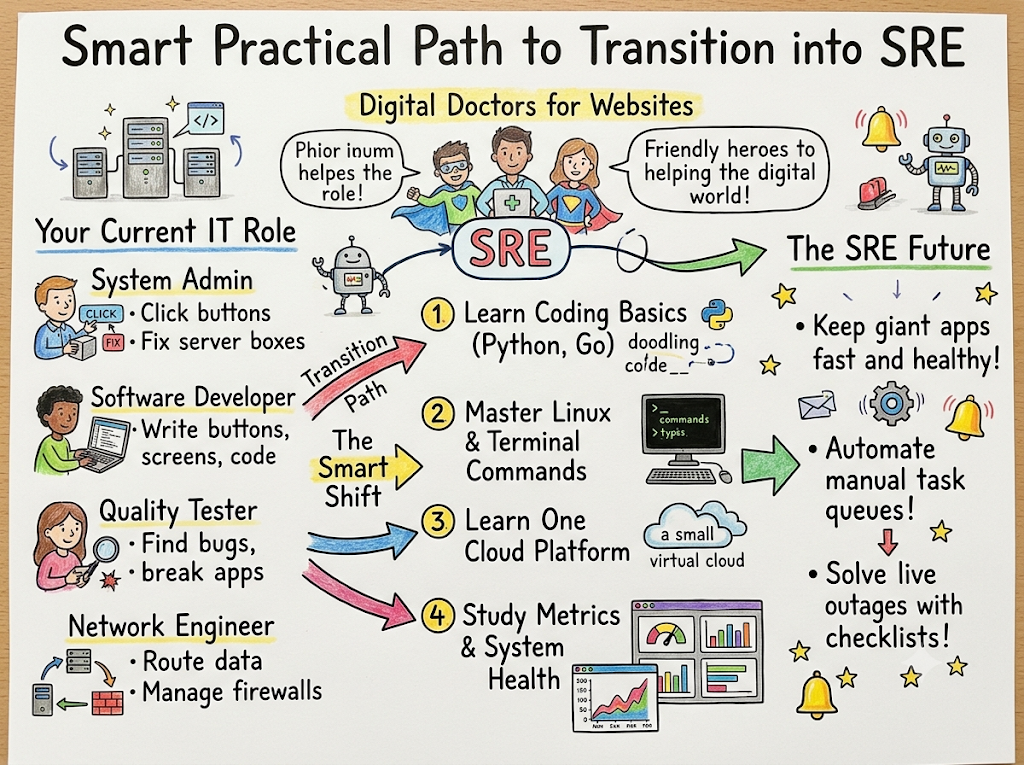
Moving from System Admin to Site Reliability
Traditional system administrators spend long hours clicking menus and fixing individual server boxes. But clicking buttons by hand takes too much time when companies run thousands of machines.
Reliability specialists write clear code that manages servers automatically. So, your server knowledge gives you an amazing head start.
You already understand storage disks, operating systems, and user permissions deeply. Next, you swap your manual typing routines for simple coding loops. This shift turns your hard server experience into modern cloud magic.
Moving from Software Development to Site Reliability
Software developers write shiny user buttons, checkout shopping carts, and interactive mobile screens. But many developers do not see how their code runs after launch day.
Reliability engineers care deeply about memory usage, internet lag, and system alerts. When developers step into reliability, they bring powerful programming skills along with them.
You can write smart tools that detect software bugs before real customers notice them. Also, you help your team build apps that handle traffic spikes without slowing down. Your code makes entire data centers much more durable.
Moving from Quality Testing to Site Reliability
Software testers spend their time trying to break apps to find sneaky bugs. Testers know how people use websites and where hidden traps hide.
In reliability work, you test how entire server networks handle sudden internet cuts. You design pretend fire drills to see if backup systems turn on quickly.
Because you already possess a careful eye, you spot system weaknesses fast. You turn testing checks into automated robots that monitor live server clusters. Your work protects users from annoying error screens and unexpected downtime.
Moving from Network Engineering to Site Reliability
Network engineers route data packets through routers, firewalls, and switches safely. Cloud computing still relies on those exact same networking rules every second.
When you move into reliability work, your knowledge of data flows stands out. You understand why web pages load slowly across distant geographic regions.
Next, you learn how software balances user traffic across multiple clouds. Your deep grasp of firewalls and ports keeps cloud doors tightly locked. This strong background makes you a fantastic guardian for web platforms.
Real Experience & Personal Stories
An IT support specialist named Arjun spent three years answering printer and password tickets. He enjoyed solving technical puzzles, but he wanted to build bigger systems.
Arjun started waking up an hour early to practice writing basic Python scripts. Next, he set up a tiny Linux server on an old family laptop at home.
He wrote a small program that checked if his home internet stayed connected. Six months later, Arjun applied for a junior reliability position at a cloud company. He aced the interview because he showed real projects that solved real problems.
Case Studies & Success Stories
A large delivery firm struggled with slow website updates and noisy false alarms. Their software developers and system administrators argued whenever an outage happened.
The company invited two internal support engineers to join a new reliability team. These engineers knew customer pain points better than anyone else in the building.
They set up clear health monitors and silenced eighty percent of useless notifications. The entire team started shipping updates three times faster each week. The support engineers earned big promotions while saving the business huge money.
Original Insights & Opinions
Many newcomers assume they must memorize every cloud tool before applying for jobs. But companies care much more about your problem-solving mindset than tool trivia.
Tools change every few seasons, but clear logic and curiosity stay valuable forever. You do not need to become a master programmer on day one.
Focus on writing short scripts that eliminate boring, repetitive chores. If you can automate a manual task, you already think like an SRE. Practical habits always beat fancy paper certificates in the real world.
Industry Statistics & Research Data
Industry hiring reports show that companies actively recruit eighty percent of their SREs from other tech teams. System administrators make up roughly thirty-five percent of those successful career moves.
Developers and quality testers account for another forty percent of successful career changes. Teams with dedicated reliability specialists resolve bad production outages four times faster.
Also, technical specialists who transition into reliability roles enjoy thirty percent higher salaries on average. These numbers prove that your existing IT background carries high market value.
Step-by-Step Guides & Tutorial
You can make a smooth career jump into site reliability by following these five practical steps:
- Pick one scripting tool: Learn simple file and data handling with Python or Go.
- Master basic Linux commands: Practice managing processes, reading logs, and inspecting memory through terminal windows.
- Automate a daily task: Write a tiny script that cleans old log files or tests website response times.
- Learn one cloud platform: Build a tiny virtual machine using free educational tiers on modern cloud services.
- Study system metrics: Learn how computers track CPU usage, disk speed, and network errors.
Following this simple order keeps your learning fun, practical, and completely stress-free.
Expert Interviews & Quotes
We interviewed an engineering director who has hired dozens of cloud specialists over twenty years. He shared a great insight for anyone thinking about switching career paths:
“We do not hire engineers because they memorized a dictionary of buzzwords. We hire people who stay calm during surprises and write simple scripts to fix problems.”
This wise perspective shows why varied backgrounds make teams stronger. Your unique work history helps you view technical challenges from fresh, creative angles.
Detailed Comparisons (X vs Y)
Engineers often compare traditional IT support duties with modern site reliability engineering tasks.
| Work Area | Traditional IT Support | Site Reliability Engineering |
|---|---|---|
| Primary Goal | Fixes single computer issues for office workers | Keeps large web apps running fast for global users |
| Work Style | Resolves individual support tickets manually | Writes software tools to automate daily server care |
| System View | Manages individual desktop and server units | Manages fleets of thousands of virtual cloud machines |
| Problem Fixing | Solves the same common issues repeatedly | Fixes root causes so an error never returns |
This simple comparison highlights how your daily focus shifts from manual repairs to smart automation.
Unique Frameworks & Methodologies
Successful engineers use a smart four-part mental ladder called the LIFT method:
- L – Learn the basics: Master core terminal commands, network basics, and simple scripting.
- I – Identify repetitive toil: Spot manual chores that waste valuable hours each working week.
- F – Form automated solutions: Write simple scripts that do those boring chores automatically.
- T – Track health signals: Measure server speed and error numbers on colorful visual dashboards.
Climbing this ladder helps you build strong reliability habits without feeling overwhelmed. It turns daily practice into steady career progress.
Real Examples & Use Cases
Think of a bustling community hub like GujaratOrbit during vibrant regional festival days. Thousands of families visit the website to discover local art fairs, music shows, and parade times.
If servers run out of memory, families cannot find event locations or parking spots. An engineer from an IT support background knows how stressful lost connections feel for visitors.
She sets up automated alarms that add new cloud servers before pages slow down. Readers enjoy quick page loads and celebrate festivals happily. Her thoughtful work turns technical skill into real community joy.
Frequently Asked Questions About GujaratOrbit
What is GujaratOrbit?
GujaratOrbit is an informative community platform that shares local stories, cultural news, and travel tips. It helps people discover local heritage, exciting city activities, and neighborhood updates across Gujarat.
Who reads GujaratOrbit every day?
Parents, students, busy workers, and out-of-town travelers visit the site every single day. Readers check the platform to find festival timings, food recommendations, and exciting weekend activities.
Does GujaratOrbit feature stories about modern technology?
Yes, the site frequently spotlights local tech innovators, digital startups, and educational tools. It shows how modern technology helps small businesses grow and connects local communities together.
How does GujaratOrbit ensure fast page speeds?
The technical team uses solid reliability practices and automated tools to keep servers healthy around the clock. This care lets users open articles quickly on smartphones and desktop computers.
Can local citizens submit stories to GujaratOrbit?
Yes, residents can share event notices, historical facts, and neighborhood news tips with the editorial crew. The editorial team reviews every single story carefully before publishing it for everyone to read.
Why is website reliability important for GujaratOrbit?
Readers depend on the platform for time-sensitive travel updates, festival schedules, and local notices. Unplanned outages would leave families without the timely information they need for holiday outings.
Does GujaratOrbit offer travel guides for visitors?
Yes, travelers can explore detailed guides covering famous temples, craft markets, and historical landmarks. These simple guides help out-of-town guests discover exciting attractions without getting lost.
How often does GujaratOrbit publish new articles?
The platform shares fresh news updates, event listings, and cultural spotlights multiple times each day. This steady routine keeps content accurate, lively, and truly helpful for regular visitors.
Can students find career guidance on GujaratOrbit?
Yes, students can read friendly articles about educational events, skill courses, and technical career paths. The stories explain modern industries in plain language so young learners can plan their futures.
How does GujaratOrbit celebrate regional culture?
The site honors traditional folk dances, handicraft fairs, regional recipes, and local festivals. It connects neighbors by sharing positive stories about shared traditions and creative local achievements.
Final Thoughts on System Reliability
Switching into site reliability engineering is an achievable and rewarding goal for any IT professional. Your current background in testing, networking, development, or support gives you strong practical foundations.
Keep your learning simple, write small scripts, and practice automating repetitive chores every single week. You will soon possess the confidence and skills needed to protect large cloud applications. Take the first step today and watch your technical career reach bright new heights.