🧭 Introduction & Overview
🔍 What is Platform Engineering?
Platform Engineering is the discipline of designing and building internal developer platforms (IDPs) that provide reusable tools, services, and workflows. These platforms help developers deploy and operate applications reliably and securely, without requiring deep knowledge of infrastructure, CI/CD, or security policies.
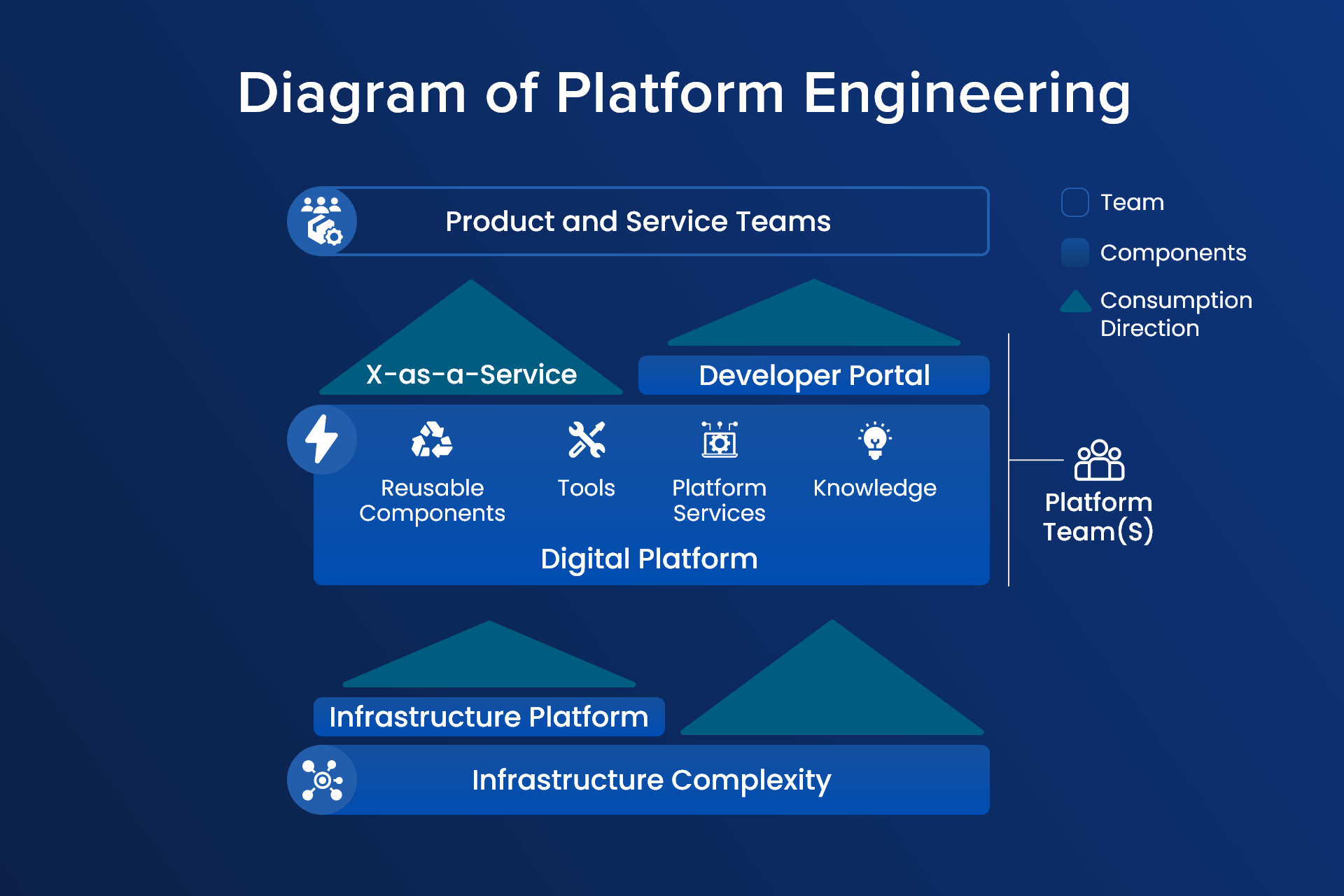
Goal: Abstract complexity and empower product teams to ship faster with built-in security and compliance.
📜 History or Background
- DevOps Era: DevOps grew to bridge the gap between dev and ops teams but became unscalable in large orgs.
- Developer Productivity Platforms (DPPs) emerged to systematize DevOps workflows.
- Platform Engineering evolved from the need to productize DevOps practices — treating infrastructure and tooling as a product.
- Organizations like Netflix, Spotify, and Google led early adoption.
🎯 Why is it Relevant in DevSecOps?
- Built-in security: Security policies are baked into platforms (e.g., image scanning, RBAC).
- Shift-left enablement: Developers get pre-vetted tools and templates.
- Scalability & consistency: Repeatable infrastructure as code (IaC) and standardized CI/CD.
- Audit & compliance: Centralized logging, monitoring, and audit control support security standards.
📚 Core Concepts & Terminology
🧩 Key Terms and Definitions
| Term | Definition |
|---|---|
| Internal Developer Platform (IDP) | A self-service portal with curated tools, services, APIs, and environments |
| Golden Path | Secure and opinionated workflows recommended for common developer tasks |
| Self-Service Infrastructure | Developers can request environments or deploy services via platform interfaces |
| Platform as a Product | Treating platform features like products, focusing on usability and feedback |
| Paved Road | A set of pre-approved, secure tools and patterns offered by the platform |
🔄 How It Fits into the DevSecOps Lifecycle
- Plan: Pre-approved templates and blueprints with compliance rules
- Develop: Secure IDE extensions, secrets management, and SAST
- Build: Standardized CI pipelines integrated with scanning tools
- Test: Built-in security testing and ephemeral test environments
- Release: Deployment gates, role-based access
- Monitor: Logging, tracing, and anomaly detection built-in
🏗️ Architecture & How It Works
🧱 Components & Internal Workflow
Typical Platform Engineering Stack:
- Infrastructure Layer
- Kubernetes, AWS, GCP, Azure, Terraform, Pulumi
- Developer Experience Layer
- Portals: Backstage, Humanitec
- Templates: Cookiecutter, Yeoman
- CLI & APIs for dev teams
- Security & Compliance Layer
- Policy-as-code (OPA, Kyverno), SAST/DAST tools, RBAC
- CI/CD Tooling Layer
- GitHub Actions, GitLab CI, ArgoCD, Tekton
- Observability Layer
- Prometheus, Grafana, Loki, ELK, Datadog
🖼️ Architecture Diagram (Described)
          ┌─────────────────────────────┐
          │    Internal Developer CLI   │
          └────────────┬────────────────┘
                       ↓
          ┌─────────────────────────────┐
          │  Developer Portal (UI/API)  │◄──┐
          └────────────┬────────────────┘   │
                       ↓                    │
          ┌─────────────────────────────┐   │
          │ Templates & Golden Paths    │   │
          └────────────┬────────────────┘   │
                       ↓                    │
        ┌──────────────┴──────────────┐     │
        │     CI/CD Pipelines         │─────┘
        └────────────┬───────────────┘
                     ↓
         ┌─────────────────────────────┐
         │ Infrastructure Provisioning │ (IaC tools)
         └────────────┬────────────────┘
                      ↓
         ┌─────────────────────────────┐
         │ Observability & Security    │
         └─────────────────────────────┘
🔗 Integration Points with CI/CD or Cloud Tools
| Layer | Integration |
|---|---|
| CI/CD | Jenkins, ArgoCD, Tekton, GitHub Actions |
| IaC | Terraform, Pulumi, Crossplane |
| Cloud | AWS, GCP, Azure (via APIs and IAM) |
| Observability | Prometheus, Datadog, Sentry |
| Security | OPA, Snyk, Aqua, Trivy |
🛠️ Installation & Getting Started
⚙️ Basic Setup or Prerequisites
- Kubernetes cluster (minikube, EKS, etc.)
- Helm installed
- Git, Docker
- Optional: Backstage, ArgoCD, Terraform
🧪 Hands-on: Step-by-Step Setup (Minimal Platform with Backstage + ArgoCD)
# 1. Install Backstage (Developer Portal)
npx @backstage/create-app
cd my-platform-app
yarn dev

# 2. Set up ArgoCD (CI/CD)
kubectl create namespace argocd
kubectl apply -n argocd -f https://raw.githubusercontent.com/argoproj/argo-cd/stable/manifests/install.yaml

# 3. Deploy a sample app via ArgoCD
kubectl apply -f app-deployment.yaml

# 4. Connect ArgoCD to Backstage
# Register ArgoCD plugins and provide credentials in Backstage config
🔐 Secure each component via TLS, RBAC, and GitOps policies.
🌍 Real-World Use Cases
📌 Example 1: FinTech (PCI-DSS Compliance)
- Use pre-approved Kubernetes templates
- Enforce secure CI/CD workflows with OPA
- Auto-generate audit logs for every deployment
📌 Example 2: Healthcare SaaS
- Built-in scanning of container images before release
- Centralized secrets management (Vault integration)
- Deploy HIPAA-compliant services using golden paths
📌 Example 3: E-Commerce with Microservices
- Self-service onboarding for microservices
- Managed service mesh + observability integration
- Auto-provision of staging environments on PR
📌 Example 4: Government Cloud
- Strict access control via IAM integration
- Approved infrastructure modules (Terraform Registry)
- GitOps for reproducible compliance environments
✅ Benefits & Limitations
🟢 Key Benefits
- 🚀 Accelerated Developer Velocity
- 🔐 Embedded Security & Compliance
- 📦 Standardization Across Teams
- 🔁 Repeatable and Scalable Workflows
🔴 Common Limitations
- ⚙️ Initial Setup Complexity
- 🧠 Skill Gap in Managing IDPs
- 🛠️ Maintenance Overhead
- 🤝 Requires Organizational Buy-in
🔐 Best Practices & Recommendations
✅ Security Tips
- Use policy-as-code tools (OPA, Kyverno) for security controls
- Enforce least privilege with RBAC and IAM
- Integrate secrets scanning and image validation
⚙️ Performance & Maintenance
- Monitor CI/CD latency and provision times
- Audit usage of templates and tools
- Regularly update dependencies and plugins
📋 Compliance & Automation
- Automate compliance scans (e.g., CIS Benchmarks)
- Centralize audit logs and traceability
- Tag resources for cost and ownership tracking
⚖️ Comparison with Alternatives
| Approach | Platform Engineering | Traditional DevOps | PaaS (e.g., Heroku) |
|---|---|---|---|
| Developer UX | Excellent (self-service) | Moderate | High |
| Security | Embedded & standardized | Ad-hoc | Limited |
| Flexibility | High | Very High | Low |
| Setup Complexity | High | Medium | Low |
| Cost Efficiency | High (at scale) | Medium | Low |
💡 When to Choose Platform Engineering?
- Large teams with multiple services
- Need for security compliance (SOC2, ISO, etc.)
- Developer onboarding is slow or inconsistent
- Existing DevOps teams are overwhelmed
🧾 Conclusion
Platform Engineering represents the next evolution of DevSecOps by operationalizing security, infrastructure, and CI/CD pipelines into an internal product for developers. When implemented correctly, it improves security posture, developer velocity, and compliance automation.
🌟 Future Trends: AI-assisted platforms, low-code interfaces, and policy-driven environments.