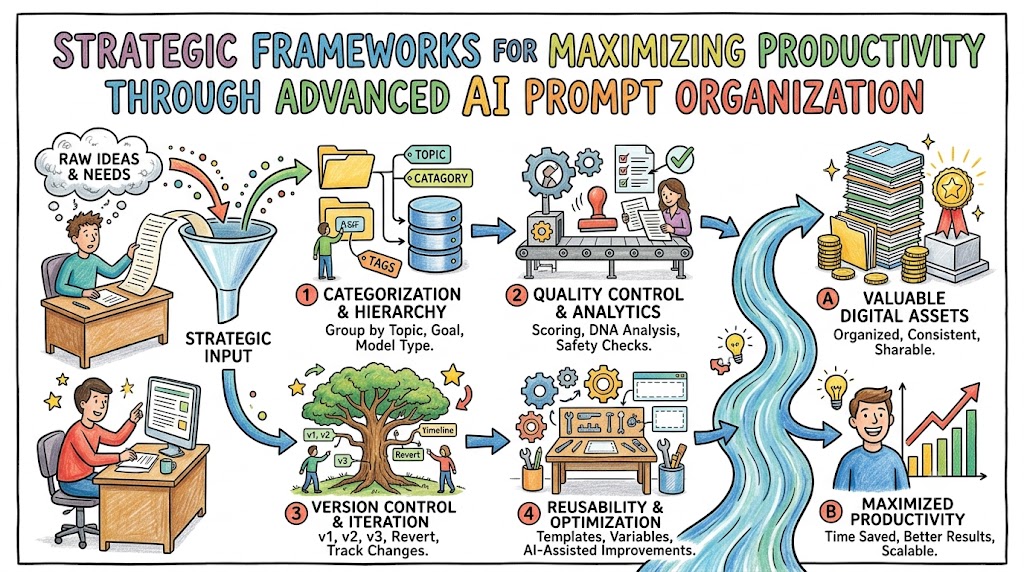
Introduction
Modern enterprises and creative professionals routinely leverage artificial intelligence to power their core operational workflows. Unfortunately, most teams continue to manage their critical prompt assets through fragmented notes, loose chat threads, and messy documents. This lack of structure creates extreme inefficiency and leads to wildly unpredictable AI outputs across different projects. Adopting a dedicated management system elevates raw text instructions into valuable, reusable digital assets. When organizations centralize and refine their prompt collections, they eliminate costly duplication, protect proprietary knowledge, and secure consistent, high-value AI performance every single time.
Why Prompt Management Matters More Than Ever
Directing advanced artificial intelligence systems requires strict precision and clear structural direction. Unstructured or ambiguous prompts force users into tedious cycles of manual revision while consuming excessive compute cycles. Implementing systematic prompt management captures successful phrasing formulas and embeds them directly into organizational workflows. Rather than forcing employees to discover prompt techniques through trial and error, centralized systems deliver ready-to-use templates across every department. Consequently, teams build a scalable operational library that drives faster execution, reduces workflow friction, and maintains top-tier quality standards.
Common Problems Faced by AI Users
Disorganized prompt handling creates persistent roadblocks for individuals and corporate teams alike. Professionals routinely misplace high-performing prompts within past chat logs, forcing them to reconstruct successful instructions from scratch. Minor phrasing shifts frequently cause AI models to return vastly different results, which compromises work consistency across collaborative projects. Furthermore, teams suffer when members store effective instructions in personal files instead of shared systems. Lacking execution metrics makes identifying the root cause of a failed prompt nearly impossible. These ongoing bottlenecks waste valuable time, increase user frustration, and restrict overall business agility.
What is Promptosia
Promptosia serves as a central intelligence platform that organizes, optimizes, and scales your artificial intelligence assets. It replaces loose text documents with a dedicated workspace designed for storing, testing, and sharing high-value prompt instructions. Rather than allowing brilliant ideas to fade into historic session logs, the platform empowers users to curate an organized, tagged asset collection. It bridges basic prompt creation and professional prompt engineering by providing real-time analytics, automated refinement, and quality scoring. Whether you work as an independent consultant or lead a global enterprise team, this system provides the operational backbone required for repeatable AI success.
What It Helps in Real Life
Deploying a dedicated prompt management tool removes the daily friction that hinders technical and creative output. Content strategists instantly pull up verified campaign prompts without sifting through personal folders. Engineering teams store standardized code-review patterns that enforce uniform coding practices across every sprint. Researchers rapidly deploy structured analytical models, while customer success teams launch validated response frameworks to solve user queries faster. Replacing guesswork with pre-vetted digital assets saves hours every week, freeing professionals to focus on high-impact strategic initiatives.
What Makes a Modern AI Prompt Management Tool?
A modern management tool must extend far beyond basic text storage capabilities. It combines dynamic categorization, automated prompt enhancement, and seamless collaboration features to support complex modern workflows. Next-generation platforms provide full version histories, multi-variable input fields, and tag-based search filters for instant asset discovery. They also incorporate flexible variable fields, allowing users to customize core templates without altering underlying instruction logic. Integrating these capabilities into one unified platform ensures that your prompt assets remain active, organized, and immediately executable across all major AI models.
Building a Centralized AI Prompt Library
Constructing a central repository forms the foundation of reliable artificial intelligence execution. Gathering all instructions into one secure workspace eliminates scattered notes and streamlines team operations. Users can group prompts by project, business function, or target output while attaching descriptive tags and dynamic input fields. This disciplined structure ensures that colleagues find exact instructions within seconds. Over time, your shared repository becomes a vital corporate knowledge base that accelerates onboarding, ensures output quality, and protects critical operational insights.
Promptosia as a Complete Prompt Engineering Platform
Going far beyond simple file storage, this platform delivers full lifecycle support for your prompt engineering needs. It guides instructions from early conceptual drafts to fully optimized, tested, and shared enterprise resources. Users can draft initial concepts, analyze structural integrity, polish phrasing, and execute comparative tests inside a single interface. This all-in-one setup removes the need to switch between separate utility tools during development. Providing a dedicated space for continuous optimization allows professionals to transition from casual AI usage to systematic prompt engineering with total clarity.
Organizing Prompts Efficiently
Optimal productivity demands smart, highly structured asset organization. Using dynamic tags, clear categories, and fill-in-the-blank variable fields keeps growing prompt collections structured and accessible. Users can categorize prompts based on specific functional domains like copywriting, software debugging, market analysis, or strategic planning. Powerful search filters let you retrieve target instructions instantly based on keywords, category tags, or quality scores. This clean structure prevents library clutter and guarantees that your prompts remain ready for deployment whenever tight deadlines strike.
Improving Prompt Quality with AI
Manual prompt refinement often turns into an exhausting process of trial and error. Automated enhancement engines accelerate this optimization cycle by analyzing rough drafts and proposing immediate structural upgrades. These intelligent tools spot missing context, fix vague wording, and remove ambiguous formatting rules to turn weak inputs into high-performing instructions. Consequently, users receive superior AI outputs on their first try without spending time on manual tweaking. This automated refinement process boosts daily output while teaching users better prompt construction techniques over time.
Understanding Prompts with AI Prompt Analysis
Designing top-tier instructions requires a clear understanding of the structural elements that drive AI model performance. Deep analysis tools evaluate prompts by breaking them down into primary goals, dynamic variables, target audiences, tone parameters, and output specifications. They also flag safety risks and evaluate practical utility prior to execution. Uncovering these core attributes reveals why specific phrasing succeeds while other options fail, enabling creators to build better instructions systematically.
Measuring Prompt Effectiveness
Measuring prompt performance through objective metrics remains essential for building efficient AI workflows. Without clear quantitative data, evaluating instructions relies entirely on subjective opinion. Advanced evaluation systems test your instructions against key metrics like clarity, contextual depth, structural formatting, reusability, safety compliance, and practical utility. This systematic audit helps users catch structural flaws before deploying prompts on live projects. Establishing concrete performance benchmarks allows teams to upgrade their prompt collections with complete confidence.
Why Prompt Scoring Is Valuable
Objective performance analysis depends on clear numerical evaluations. Assigning a clear visual score to your instructions delivers immediate feedback regarding prompt quality and execution readiness. This scoring system highlights specific gaps, such as missing background details or incomplete formatting rules. Catching these flaws early saves valuable compute resources and time by preventing failed AI runs. Furthermore, numerical scoring sets clear quality standards across team libraries, ensuring members deploy only thoroughly vetted, high-performing prompts.
Tracking Improvements with Prompt Version Control
Prompts evolve continuously, making detailed revision tracking vital for preserving winning formulas. Built-in version control records every edit, adjustment, and structural tweak made over time. If a new edit produces weak results, users can restore a high-performing past version with a single click. This complete historical log offers total visibility into how specific syntax adjustments impact final AI outputs. Treating prompts like managed software code protects valuable assets and encourages bold experimentation without the fear of losing effective templates.
Testing and Comparing Prompt Performance
Finding the best prompt variation requires direct, side-by-side comparative testing. Advanced testing environments allow users to execute multiple prompt versions simultaneously and compare outputs under identical test conditions. Teams can quickly evaluate variations in tone, context, and variable placement to discover the optimal setup. This data-backed approach removes guesswork from prompt optimization and helps creators choose winning options based on real results. Testing systematically before full deployment guarantees that active prompts generate precise, reliable responses consistently.
Community-Based Prompt Evaluation
Human judgment provides critical context when evaluating creative and complex AI outputs. Interactive community features like blind voting allow users to compare two competing outputs without knowing which prompt generated them. This anonymous review process yields unbiased, real-world performance feedback. Gathering crowdsourced ratings uncovers subtle nuances that automated analysis tools might miss. Participating in community evaluation sharpens prompt engineering skills while establishing authentic benchmarks for output quality.
Reusable AI Prompt Templates Save Time
Writing complex instructions from scratch for recurring tasks wastes time and introduces unwanted errors. Pre-structured prompt templates offer ready-to-use frameworks across diverse operational fields, including software engineering, digital marketing, corporate management, and creative writing. Users can easily adapt any template to specific tasks by filling in dynamic variables without disturbing core prompt logic. Deploying standardized templates speeds up daily operations while maintaining high quality standards across every project.
Sharing and Collaborating on Prompts
Smooth collaboration turns individual discoveries into enterprise-wide advantages. Built-in sharing tools like digital prompt passports allow professionals to publish their top-performing instructions publicly or within private teams. Colleagues can review shared frameworks, copy useful instructions into personal libraries, or fork public templates to create custom variations. This open collaborative environment breaks down operational silos and accelerates team learning. Facilitating smooth asset sharing converts prompt engineering into an interactive, team-wide effort that drives constant innovation.
Benefits for Different Types of Users
Adaptable management systems meet the specific operational demands of professionals across diverse industries, replacing manual friction with organized workflows.
| User Role | Primary Benefit | Key Use Case |
|---|---|---|
| Content Creators | Preserves brand voice and style | Generates blog outlines and social copy rapidly |
| Software Engineers | Enforces team coding standards | Stores code-refactoring and debugging patterns |
| Marketing Strategists | Scales campaign execution | Automates audience research and ad copywriting |
| Academic Researchers | Standardizes analysis frameworks | Summarizes literature and structures study models |
| Business Managers | Unifies internal communications | Automates weekly reporting and team updates |
Why Prompt Management Will Become Essential
As businesses integrate artificial intelligence deeper into daily operations, structured prompt management will transition from a convenient option into a core requirement. Modern organizations will soon protect their prompt libraries with the same security and care given to proprietary databases and source code. Professionals who master prompt organization today secure a lasting advantage in speed, execution quality, and output consistency. As AI models grow more complex, maintaining organized, tested, and version-controlled instructions will prove vital for long-term operational success.
Why Promptosia Is Worth Exploring
This comprehensive platform delivers everything required to manage the entire lifecycle of your artificial intelligence instructions. It combines library storage, automated refinement, objective scoring, version tracking, and team collaboration into one user-friendly workspace. Instead of struggling with lost notes and unpredictable AI outputs, you can build an organized repository of high-value digital assets. Whether you want to streamline daily personal tasks or scale enterprise AI operations, this platform provides the exact tools needed to maximize your productivity.
Frequently Asked Questions About Promptosia
1. Which key features enable Promptosia to optimize daily AI tasks?
Promptosia centralizes loose instructions into an organized, searchable digital library. It enhances operational efficiency by offering automated prompt refinement, numerical quality scoring, detailed version control, and collaborative sharing features.
2. Does the platform provide tools to polish incomplete or weak drafts?
Built-in AI optimization tools analyze rough drafts, identify missing context, eliminate ambiguous wording, and restructure inputs to deliver precise AI outputs on your very first run.
3. What specific criteria determine the total prompt quality score?
The scoring system audits clarity, contextual depth, formatting structure, reusability, safety compliance, and practical utility to generate a numerical rating with clear improvement recommendations.
4. How does the Prompt DNA system break down custom inputs?
The Prompt DNA feature analyzes your instructions by dissecting foundational components like primary goals, dynamic variables, target audiences, tone settings, formatting rules, and safety parameters.
5. Can users track historical prompt revisions and restore older versions?
Integrated version control logs every modification made to your instructions over time, allowing users to review historical adjustments and restore previous top-performing versions with a single click.
6. How do fill-in-the-blank variables function inside prompt templates?
Dynamic variables act as customizable placeholders within core prompt structures, enabling users to adapt templates for specific tasks without altering fundamental prompt logic.
7. What operational benefits do users gain through Prompt Duels?
Prompt Duels allow community members to judge competing prompt outputs through blind voting, delivering unbiased, real-world evaluation feedback that helps creators refine their prompt formulas.
8. In what ways can enterprise teams share and collaborate on prompts?
Users share prompt collections through publishable digital passports, allowing team members to view shared assets, copy effective templates, or fork existing inputs for custom development.
9. Why do software engineering teams require structured prompt management?
Developers use organized repositories to store verified code-refactoring patterns, automate technical documentation, manage debugging prompts, and maintain uniform coding standards across projects.
10. How do pre-built templates accelerate daily project completion?
Pre-structured templates deliver ready-to-use frameworks for recurring tasks, removing the need to write complex instructions from scratch and speeding up daily execution across departments.
Essential Takeaways
Maximizing the business value of artificial intelligence requires clear organization, sound strategy, and continuous instruction refinement. Dedicated prompt management platforms supply the ideal operational infrastructure to transform casual ideas into permanent, high-value corporate assets. Utilizing automated quality scoring, version control, dynamic organization, and team collaboration gives organizations complete control over their AI workflows. As artificial intelligence continues to redefine modern industry standards, organizing your prompt assets today ensures your workforce stays efficient, competitive, and ready for future innovation.