Introduction
Customers often face too many choices when they shop or browse online. They may struggle to find products, videos, articles, or services they like.
Recommendation engines help solve this problem. They study customer interests and suggest useful items. These suggestions can make websites and apps easier to use.
For example, an online store can suggest products based on past purchases. A video platform can recommend films based on viewing habits. A music service can suggest songs that match a listener’s taste.
Businesses use recommendation engines to improve product discovery. They also use them to increase customer engagement and support sales.
Many platforms use artificial intelligence (AI) and machine learning. These tools help study user behavior and find patterns.
However, each recommendation engine offers different features. Some focus on online stores. Others support content platforms, customer experiences, and large product catalogs.
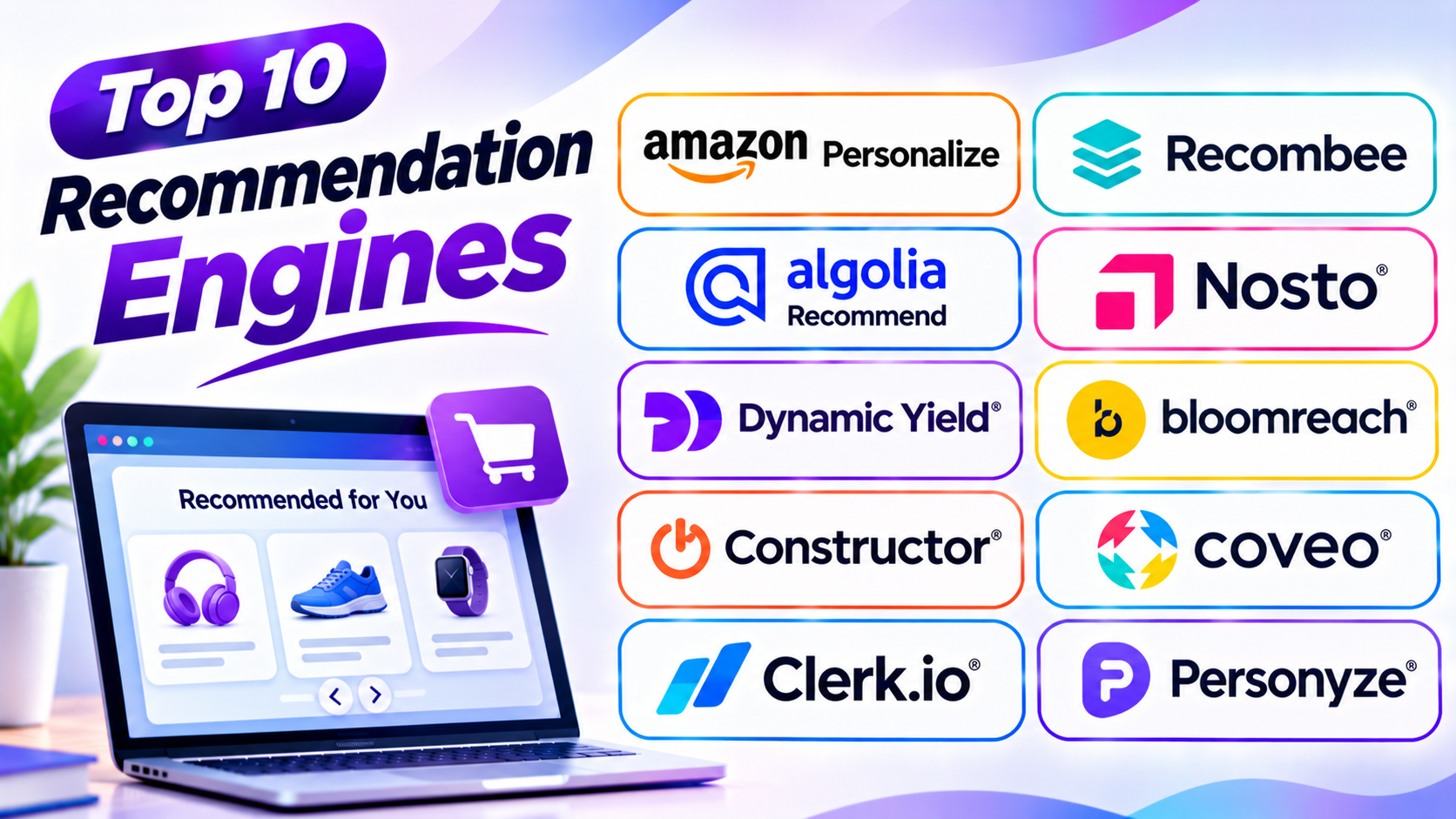
This guide explores ten popular recommendation engines. It explains their features, uses, pros, and cons. It also includes a comparison table and a simple selection guide.
What Is a Recommendation Engine?
A recommendation engine is software that suggests products, services, or content to users. It studies customer interests and activity to find relevant choices.
For example, an online shopping website may suggest shoes with a matching bag. A video platform may recommend films based on past viewing habits.
A recommendation engine can use several methods to create suggestions.
Types of Recommendation Engines
1. Collaborative Filtering
This method studies the choices of similar users. It suggests items that people with similar interests enjoy.
2. Content-Based Filtering
This method studies item details and user interests. It suggests items with features similar to those a person already likes.
3. Hybrid Recommendations
This method combines different recommendation methods. It can use both customer behavior and product details.
4. AI-Based Recommendations
AI helps software study large amounts of information. It can find patterns and predict which items may interest users.
5. Popular-Item Recommendations
This method suggests popular or trending items. It can help new visitors who have no browsing history.
Businesses use these methods across many industries. Online stores, media platforms, travel websites, and mobile apps can all benefit.
Top 10 Recommendation Engines
1. Amazon Personalize
<text>Amazon Personalize</text> helps businesses create personalized recommendations. It uses machine learning to suggest products, videos, articles, and other items.
The platform studies customer activity and item information. Businesses can use details such as clicks, purchases, ratings, and viewing history.
Amazon Personalize uses this information to create relevant suggestions. It can help customers discover products and content that match their interests.
The service supports real-time recommendations. This means businesses can respond to customer activity and show useful suggestions.
Amazon Personalize also works with other Amazon Web Services products. This makes it useful for companies that already use Amazon’s cloud services.
It suits businesses that want custom recommendation experiences. It works especially well for online stores, media services, and large digital platforms.
Key Features
- Machine learning recommendations
- Personalized product suggestions
- Real-time recommendations
- Similar-item suggestions
- Customer activity analysis
- Custom recommendation models
- Product and content recommendations
- Integration with Amazon Web Services
Pros
- Supports different recommendation needs.
- Offers real-time suggestions.
- Works with Amazon cloud services.
- Can handle large amounts of data.
- Helps create personalized experiences.
Cons
- Requires technical knowledge.
- Businesses must prepare useful data.
- Setup may need expert support.
- Costs depend on service usage.
2. Recombee
<text>Recombee</text> helps businesses suggest relevant products, content, and services. It supports websites, mobile apps, and online platforms.
The platform studies user activity and item details. It can use clicks, purchases, ratings, and other customer actions.
Recombee offers different recommendation methods. Businesses can suggest similar items, popular products, and personalized choices.
The platform also provides tools for measuring recommendation results. Teams can review performance and improve their suggestions.
Recombee suits ecommerce stores, media websites, and online services. It is useful for businesses that want flexible recommendations without building every feature themselves.
Key Features
- AI-powered recommendations
- Personalized product suggestions
- Similar-item recommendations
- Real-time recommendation updates
- Customer activity analysis
- Recommendation performance reports
- Custom recommendation settings
- Support for websites and mobile apps
Pros
- Offers flexible recommendation options.
- Supports many types of businesses.
- Helps personalize user experiences.
- Provides useful performance reports.
- Supports different recommendation methods.
Cons
- Setup may need technical help.
- Data quality affects results.
- Advanced settings need some learning.
- Large projects need careful planning.
3. Algolia Recommend
<text>Algolia Recommend</text> helps businesses suggest relevant products and content. It works with Algolia’s search and discovery platform.
The tool uses customer activity and product information. It can suggest related products, popular items, and products that customers may want together.
For example, an online store can show similar products on a product page. It can also suggest useful items inside a shopping cart.
Algolia Recommend helps customers discover products faster. Businesses can combine recommendations with search and product display tools.
The platform suits ecommerce businesses and content websites. It is especially useful for companies that already use Algolia’s search products.
Key Features
- Related-item recommendations
- Frequently bought together suggestions
- Trending-item recommendations
- Personalized product discovery
- Search and discovery integration
- Recommendation performance reports
- Product catalog support
- Flexible recommendation settings
Pros
- Works with Algolia search tools.
- Helps improve product discovery.
- Offers different recommendation types.
- Supports ecommerce use cases.
- Helps customers find related products.
Cons
- Works best within the Algolia ecosystem.
- Setup may need technical support.
- Results depend on useful customer data.
- Usage costs need regular review.
4. Nosto
<text>Nosto</text> helps online stores create better shopping experiences. It combines product recommendations, search, merchandising, and personalization.
The platform studies shopping behavior and product details. It then suggests products that may match customer interests.
Retailers can display recommendations on product pages and category pages. They can also suggest related products and useful product bundles.
Nosto includes merchandising controls. These tools help store teams manage how products appear across shopping pages.
The platform also supports personalized content. Businesses can change parts of the shopping experience based on customer interests.
Nosto suits online retailers that want better product discovery. It can help stores manage large catalogs and serve different customer groups.
Key Features
- AI-powered product recommendations
- Personalized product discovery
- Product merchandising
- Related-product suggestions
- Search and category tools
- Customer segmentation
- Content personalization
- Ecommerce platform integrations
Pros
- Focuses on ecommerce needs.
- Offers several recommendation options.
- Helps improve product discovery.
- Includes useful merchandising tools.
- Supports personalized shopping experiences.
Cons
- Mainly targets online retailers.
- Some features need setup work.
- Large stores may need extra support.
- Pricing may require a custom quote.
5. Dynamic Yield
<text>Dynamic Yield</text> helps businesses create personalized digital experiences. Mastercard owns this platform.
Its recommendation tools suggest products, content, and offers. The platform uses customer behavior and machine learning to guide these suggestions.
Businesses can show different products to different visitors. They can also recommend related items based on browsing and purchase activity.
Dynamic Yield supports websites, mobile apps, and other customer channels. Its testing tools help teams compare different customer experiences.
The platform also supports audience targeting. Businesses can create customer groups and show content that matches their interests.
Dynamic Yield suits large retailers and enterprise brands. It works well for companies that want recommendations across several channels.
Key Features
- AI-powered product recommendations
- Personalized content suggestions
- Real-time audience targeting
- Website personalization
- Mobile app personalization
- Customer behavior analysis
- A/B testing
- Cross-channel recommendations
Pros
- Supports several digital channels.
- Offers advanced recommendation features.
- Helps improve product discovery.
- Combines testing with personalization.
- Supports large business needs.
Cons
- Can feel complex for new users.
- Advanced setup may need expert help.
- Costs may not suit small stores.
- Teams need time to learn its features.
6. Bloomreach
<text>Bloomreach</text> helps ecommerce businesses improve product discovery. Its platform combines search, recommendations, content, and customer engagement tools.
The recommendation features study customer behavior and product details. They then suggest products that may match customer interests.
Retailers can use Bloomreach to show related products. They can also suggest popular items and products that fit a shopper’s activity.
The platform connects recommendations with product search. This helps customers discover useful items while browsing a store.
Bloomreach also supports personalized content and marketing campaigns. Businesses can use customer information to create better shopping journeys.
Bloomreach suits medium and large ecommerce businesses. It is useful for retailers that want search, recommendations, and marketing tools together.
Key Features
- AI-powered product recommendations
- Personalized product discovery
- Ecommerce search
- Product merchandising
- Customer data tools
- Content personalization
- Marketing automation
- Commerce platform integrations
Pros
- Combines search and recommendations.
- Supports large product catalogs.
- Helps improve shopping experiences.
- Connects product discovery with marketing.
- Offers several ecommerce tools.
Cons
- Small stores may not need every feature.
- Setup can require technical support.
- Teams need time to learn the platform.
- Pricing may require a custom quote.
7. Constructor
<text>Constructor</text> helps ecommerce businesses improve product discovery. It uses AI to make product search and recommendations more relevant.
The platform studies shopping activity and product information. It uses these signals to arrange and suggest products.
Retailers can use Constructor for product recommendations, search, and category browsing. These tools help shoppers find useful products across large catalogs.
Constructor also supports product merchandising. Store teams can manage product placement and improve how customers explore categories.
Its recommendation features support product discovery across the shopping journey. Businesses can use them on search pages, category pages, and product pages.
Constructor suits large online retailers. It is useful for stores that want better search and recommendation experiences.
Key Features
- AI-powered product recommendations
- Personalized product discovery
- Ecommerce search
- Product ranking
- Category merchandising
- Customer behavior analysis
- Product catalog management
- Search and discovery reports
Pros
- Focuses on ecommerce product discovery.
- Supports search and recommendations.
- Helps organize large catalogs.
- Offers merchandising controls.
- Supports data-based product ranking.
Cons
- Mainly suits ecommerce businesses.
- Advanced use may need technical help.
- Large projects need careful planning.
- Pricing may not suit small stores.
8. Coveo
<text>Coveo</text> helps businesses provide relevant search results and recommendations. It uses AI to understand user behavior and content.
Companies can use Coveo on ecommerce websites and support portals. They can also help employees find useful information inside business systems.
The platform studies search activity and user interactions. It uses these signals to rank content and suggest relevant items.
Coveo can recommend products and support articles. This helps customers find answers and products with less effort.
Businesses can also use its reporting tools. These tools help teams understand how people search and interact with content.
Coveo suits large businesses with many products, documents, and support resources. It is useful for companies that need search and recommendations across different systems.
Key Features
- AI-powered recommendations
- Personalized search results
- Product discovery
- Content recommendations
- Customer support search
- Enterprise search
- Search performance reports
- Business system integrations
Pros
- Supports several business use cases.
- Helps users find relevant content.
- Offers AI-based search tools.
- Works with large content collections.
- Supports personalized recommendations.
Cons
- May need technical setup.
- Advanced features require planning.
- Smaller websites may not need every feature.
- Costs may suit larger businesses better.
9. Clerk.io
<text>Clerk.io</text> helps online stores improve product discovery. It offers recommendations, search, email, and customer targeting tools.
The platform studies customer activity and product information. It uses this data to suggest products that match shopper interests.
Retailers can show related products and popular items. They can also create personalized product lists for different visitors.
Clerk.io supports several ecommerce platforms. This helps stores add recommendation features without managing separate tools for every task.
The platform also provides search and email marketing features. Businesses can use these tools to create connected shopping experiences.
Clerk.io suits online retailers that want several ecommerce tools in one platform. It can help stores improve product discovery and customer engagement.
Key Features
- AI-powered product recommendations
- Personalized product lists
- Ecommerce search
- Customer segmentation
- Email personalization
- Product discovery tools
- Customer behavior analysis
- Ecommerce integrations
Pros
- Combines recommendations and search.
- Supports ecommerce businesses.
- Helps personalize product lists.
- Offers email marketing features.
- Connects with several store platforms.
Cons
- Mainly focuses on ecommerce.
- Some setups need technical support.
- Costs may grow with usage.
- Teams must review data quality.
10. Personyze
<text>Personyze</text> helps businesses personalize websites and digital experiences. It offers product recommendations, audience targeting, and content personalization.
The platform studies customer behavior and visitor details. It can use this information to show relevant products and content.
Businesses can create different experiences for different audience groups. They can also display recommendations based on browsing activity.
Personyze supports website personalization and marketing campaigns. Teams can use its tools to improve visitor engagement and product discovery.
The platform offers targeting rules and recommendation options. These features help businesses control what each visitor sees.
Personyze suits companies that want website personalization with recommendation features. It can work for ecommerce stores and other websites.
Key Features
- Product recommendations
- Website personalization
- Audience segmentation
- Behavioral targeting
- Personalized content
- Campaign automation
- Visitor analysis
- A/B testing
Pros
- Offers several personalization tools.
- Supports product recommendations.
- Helps target different audiences.
- Provides website customization options.
- Can suit smaller and growing businesses.
Cons
- Advanced rules may need learning.
- Setup needs clear planning.
- Results depend on visitor data.
- Some businesses may need extra support.
Comparison Table of the Top 10 Recommendation Engines
| Tool | Best For | Main Strength | Ideal Users |
|---|---|---|---|
| Amazon Personalize | Custom recommendation systems | Machine learning and real-time suggestions | Large businesses |
| Recombee | Flexible recommendations | Personalized product and content suggestions | Websites and apps |
| Algolia Recommend | Product discovery | Search-linked recommendations | Ecommerce businesses |
| Nosto | Online retail | Product suggestions and merchandising | Online stores |
| Dynamic Yield | Enterprise recommendations | Cross-channel personalization | Large companies |
| Bloomreach | Ecommerce discovery | Search and product recommendations | Retail businesses |
| Constructor | Product discovery | AI search and product ranking | Large retailers |
| Coveo | Enterprise search | Content and product recommendations | Large organizations |
| Clerk.io | Ecommerce recommendations | Search, email, and product suggestions | Online retailers |
| Personyze | Website personalization | Behavioral targeting and recommendations | Marketing teams |
How to Choose the Right Recommendation Engine
The best recommendation engine depends on your business goals. Some tools focus on ecommerce products. Others support content, apps, and customer experiences.
Consider these points before choosing a platform.
1. Define Your Main Goal
First, decide what you want the tool to recommend.
You may want product suggestions for an online store. You may also need video, article, or service recommendations.
Choose a platform that supports your main use case. This helps you avoid paying for features you do not need.
2. Understand Your Customer Data
Recommendation engines need useful information to make good suggestions.
Check what data the platform can use. This may include clicks, purchases, ratings, and browsing activity.
Also, make sure your data stays accurate and up to date.
3. Check Recommendation Methods
Different tools use different recommendation methods. Some compare user behavior. Others compare product details or combine several methods.
Choose a platform that supports your business needs. A hybrid approach may help when one method alone is not enough.
4. Review Integration Options
Your recommendation engine should work with your current business systems.
Check its support for your website, mobile app, ecommerce platform, and customer data tools. Good integrations can reduce manual work.
5. Consider Ease of Use
Some platforms offer simple dashboards and ready-made features. Others need technical teams and expert support.
Choose a tool that matches your team’s skills. Also, review its setup guides and customer support options.
6. Review Personalization Features
Look for features that match your customer journey. These may include related products, popular items, and personalized suggestions.
Some tools also support real-time recommendations. This can help businesses respond to customer actions quickly.
7. Check Reports and Testing Tools
A good recommendation engine should help you measure results. Check whether it reports clicks, sales, and customer engagement.
Testing tools can help compare different recommendation methods. This helps teams learn which suggestions work best.
8. Understand Pricing
Compare more than the starting price. Check usage limits, data costs, setup fees, and support charges.
Some platforms use custom pricing. Others charge based on traffic or recommendation activity.
Ask vendors for a clear cost estimate before choosing.
9. Review Privacy and Security
Recommendation engines may process personal customer information. So, check their privacy and security controls.
Make sure the platform supports the rules that apply to your business. Collect only the information you need.
10. Test Before Making a Decision
Use a demo or trial when available. Test the platform with real products and customer information.
Check the quality of its suggestions. Also, make sure your team can manage the tool.
Common Mistakes to Avoid When Using Recommendation Engines
Recommendation engines can improve product discovery. But poor setup can lead to weak suggestions.
Avoid these common mistakes:
- Using poor-quality data: Incorrect data can create irrelevant suggestions.
- Ignoring customer privacy: Follow privacy rules and respect user choices.
- Showing the same suggestions: Use relevant signals to improve recommendations.
- Ignoring new users: Add popular or trending items for visitors without history.
- Overloading users: Too many suggestions can make pages harder to use.
- Ignoring mobile users: Make sure recommendations work well on small screens.
- Skipping performance checks: Review page speed and loading times.
- Forgetting to test: Compare different recommendation methods.
- Ignoring product details: Keep names, prices, and stock information accurate.
- Not tracking results: Measure clicks, sales, and user engagement.
Questions and Answers About Recommendation Engines
1. What is a recommendation engine?
A recommendation engine is software that suggests products, services, or content. It uses user data and item details to find relevant choices.
2. How does a recommendation engine work?
It studies user activity and item information. It then uses different methods to suggest items that may interest each person.
3. What is the main purpose of a recommendation engine?
Its main purpose is to help users find relevant items. It can also improve product discovery and customer engagement.
4. What are the main types of recommendation engines?
Common types include collaborative filtering and content-based filtering. Hybrid systems combine different methods to create suggestions.
5. What is collaborative filtering?
Collaborative filtering studies the choices of similar users. It suggests items based on shared interests and behavior.
6. What is content-based filtering?
Content-based filtering studies item details and user interests. It suggests items with features similar to those a person already likes.
7. Can small businesses use recommendation engines?
Yes. Small businesses can use recommendation tools to suggest products and improve online shopping. They should choose a platform that fits their budget and needs.
8. Are recommendation engines useful for ecommerce websites?
Yes. They can suggest related products, popular items, and useful bundles. This can make product discovery easier for shoppers.
9. Do recommendation engines use artificial intelligence?
Many modern recommendation engines use AI and machine learning. These technologies help find patterns and predict user interests.
10. What data does a recommendation engine need?
It may use clicks, purchases, ratings, browsing history, and product details. The exact data depends on the recommendation method.
11. Which recommendation engine is best for large businesses?
Amazon Personalize, Dynamic Yield, and Coveo offer features for large business needs. The best choice depends on the company’s goals and systems.
12. Which recommendation engine is best for ecommerce?
Nosto, Bloomreach, Constructor, and Clerk.io focus on ecommerce needs. The best choice depends on the store and product catalog.
13. Can recommendation engines work with mobile apps?
Yes. Many platforms support mobile app recommendations. They can suggest products or content based on user activity.
14. How do businesses measure recommendation results?
Businesses can track clicks, conversions, purchases, and engagement. They can also compare different recommendation methods through testing.
15. Are recommendation engines expensive?
Costs vary by platform and usage. Some offer usage-based plans, while enterprise platforms may use custom pricing.
Final Thoughts
Recommendation engines help businesses guide users toward useful choices. They can suggest products, content, and services based on customer interests.
Amazon Personalize and Recombee suit businesses that need flexible recommendation systems. Algolia Recommend supports product discovery through search. Nosto, Bloomreach, Constructor, and Clerk.io focus on ecommerce needs.
Dynamic Yield supports large businesses with cross-channel recommendations. Coveo helps users find relevant content and products. Personyze combines recommendations with website personalization.
Every platform offers different strengths. So, compare features, costs, data needs, and ease of use before choosing.
Start with one clear goal. Test the tool with real customer activity. Then measure how well its suggestions help your customers.
The right recommendation engine can make online experiences easier. It can also help businesses connect users with the products and content they want.