Introduction
People share their thoughts about brands every day. They post reviews, comments, questions, and opinions across many online platforms. These conversations can shape how others view a business.
But how can companies understand what people say about them?
Social listening tools help businesses find these answers. They track online conversations and show what people think about brands, products, and services.
These tools also help teams study competitors, spot new trends, and find customer problems. Some platforms offer sentiment analysis, real-time alerts, influencer discovery, and detailed reports.
However, each tool serves different needs. Some focus on deep market research, while others suit small teams and growing businesses.
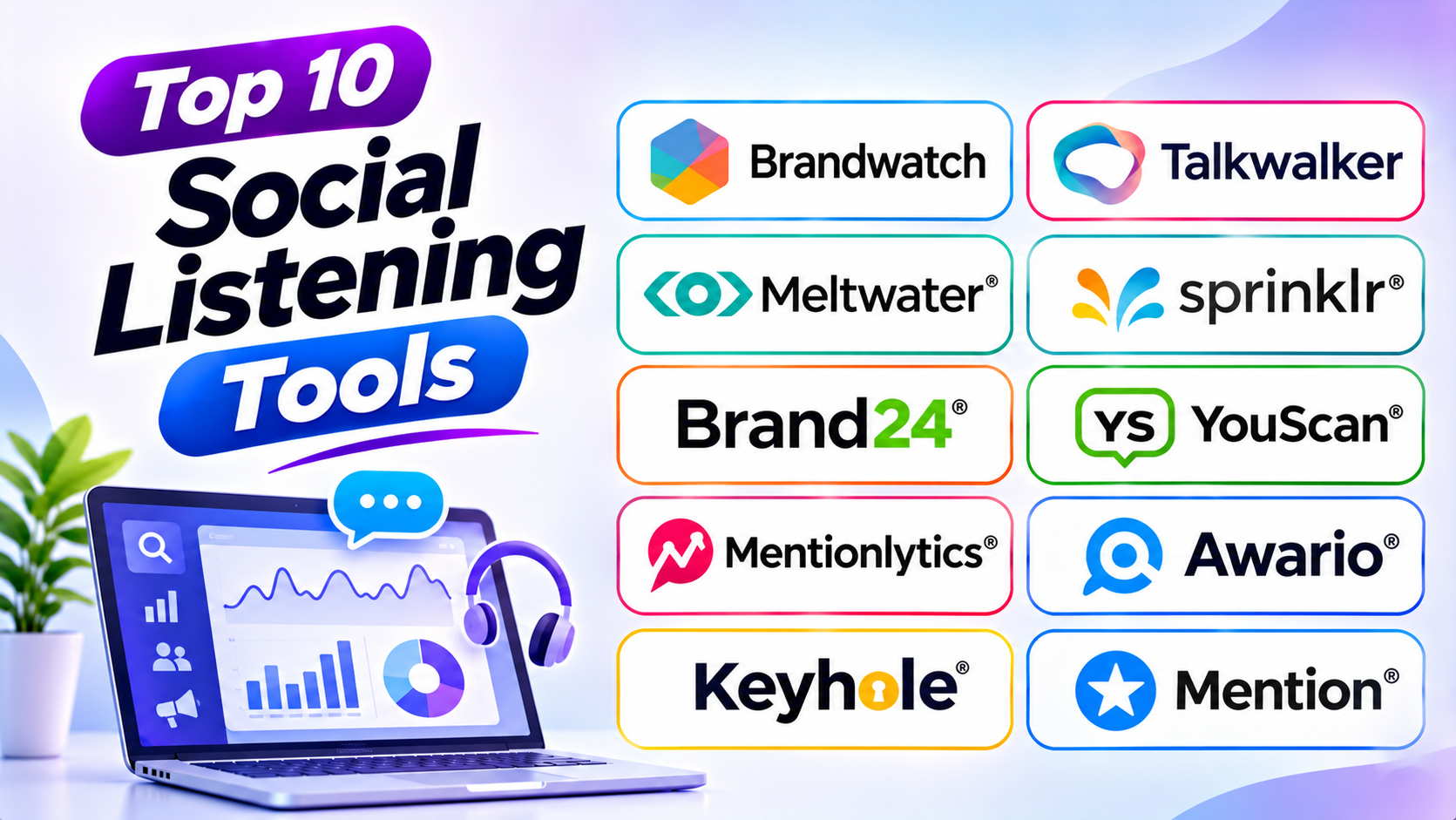
This guide explores ten popular social listening tools. It explains their features, strengths, and drawbacks. It also includes a comparison table to help you choose the right platform.
What Are Social Listening Tools?
Social listening tools help businesses track and understand online conversations. They collect public mentions from supported websites, social networks, forums, blogs, and review platforms.
These tools do more than count mentions. They help teams understand the meaning behind customer conversations.
For example, a company may track its brand name across social media. The tool can show positive comments, customer complaints, and common questions.
Businesses can use these insights to:
- Understand customer opinions.
- Monitor brand mentions.
- Track competitor activity.
- Find popular topics and trends.
- Identify customer complaints.
- Discover industry influencers.
- Measure public reactions to campaigns.
- Improve products and services.
- Protect brand reputation.
- Find new business opportunities.
Social listening helps businesses make better decisions. It turns online conversations into useful business insights.
Social Listening vs. Social Media Monitoring
Social listening and social media monitoring work together. However, they serve different purposes.
Social media monitoring tracks direct mentions, comments, messages, and other activity. It helps teams respond to people and manage daily conversations.
Social listening studies wider discussions. It helps teams understand customer feelings, market changes, and public opinions.
| Comparison | Social Media Monitoring | Social Listening |
|---|---|---|
| Main purpose | Track online activity | Understand online conversations |
| Main focus | Mentions and engagement | Opinions and trends |
| Common use | Reply to comments | Study customer needs |
| Time frame | Often short-term | Often long-term |
| Business value | Better customer response | Better business decisions |
Both methods matter. Monitoring helps teams respond quickly. Listening helps them understand why people talk.
Top 10 Social Listening Tools
1. Brandwatch
Brandwatch is a social intelligence platform for large brands and research teams. It helps businesses study online conversations and understand public opinion.
The platform collects data from many online sources. Teams can use this information to track brand mentions, study competitors, and discover industry trends.
Brandwatch also offers tools for audience research and consumer insights. Its dashboards help teams study large amounts of online data.
Businesses can use Brandwatch to understand customer interests. They can also study campaign reactions and changes in brand reputation.
Key Features
- Tracks brand and product mentions.
- Offers social media listening and analytics.
- Supports sentiment analysis.
- Helps study competitors and market trends.
- Provides audience research tools.
- Offers custom dashboards and reports.
- Supports alerts for important conversations.
Pros
- Offers detailed consumer insights.
- Supports large-scale research.
- Helps track competitors and industry trends.
- Provides flexible reporting features.
- Offers powerful data analysis tools.
Cons
- May cost too much for small businesses.
- New users may need training.
- Some features require setup and planning.
- Large reports can take time to understand.
Best For: Large businesses, research teams, and brands that need deep consumer insights.
2. Talkwalker
Talkwalker helps brands understand online conversations across social media and other digital sources. It offers tools for brand monitoring, consumer research, and market analysis.
The platform uses artificial intelligence to study online content. It can help teams find trends, track public reactions, and understand customer opinions.
Talkwalker also supports visual listening. This feature helps brands find images that contain their logos or products.
Its analytics tools help businesses measure brand performance. Teams can also compare their results with competitors.
Key Features
- Monitors online brand mentions.
- Supports text and visual listening.
- Offers sentiment analysis.
- Tracks competitors and industry trends.
- Provides audience insights.
- Supports campaign measurement.
- Offers dashboards and reports.
Pros
- Covers many types of online sources.
- Offers useful visual listening features.
- Helps identify emerging trends.
- Supports competitor research.
- Provides detailed analytics.
Cons
- Some advanced features may feel complex.
- Costs may not suit smaller teams.
- Data setup can require extra work.
- New users may need time to learn the platform.
Best For: Large brands, marketing teams, and companies that need broad online monitoring.
3. Meltwater
Meltwater combines media monitoring, social listening, and public relations tools. It helps businesses understand how people and media outlets discuss their brands.
The platform tracks online news, social conversations, and other media coverage. Teams can use these insights to follow brand reputation and industry developments.
Meltwater also helps companies find relevant journalists and media contacts. This makes it useful for public relations teams.
Its reports show how brands appear across different media channels. Businesses can use these reports to study campaign results and public reactions.
Key Features
- Monitors online news and social media.
- Tracks brand and competitor mentions.
- Offers media intelligence.
- Supports sentiment analysis.
- Helps identify media contacts.
- Provides reporting and analytics.
- Tracks industry news and trends.
Pros
- Combines media monitoring and social listening.
- Supports public relations work.
- Helps track brand reputation.
- Offers useful media research features.
- Provides detailed reporting options.
Cons
- Pricing may be high for small companies.
- The platform offers many features to learn.
- Some users may need help with setup.
- The full platform may exceed simple monitoring needs.
Best For: Public relations teams, large companies, and businesses that need media intelligence.
4. Sprinklr Insights
Sprinklr Insights helps large organizations understand customer conversations across digital channels. It forms part of the wider Sprinklr customer experience platform.
The tool helps companies monitor brand mentions and study customer opinions. Teams can use it to understand what people say about products, services, and campaigns.
Sprinklr Insights also supports competitor research and trend analysis. Its dashboards help teams review information from different channels.
Large businesses can use the platform to connect social insights with wider customer experience work.
Key Features
- Tracks conversations across supported channels.
- Offers sentiment analysis.
- Supports competitor monitoring.
- Helps identify customer trends.
- Provides dashboards and reports.
- Supports large-scale data analysis.
- Connects with wider Sprinklr tools.
Pros
- Offers broad social intelligence features.
- Supports large organizations.
- Connects listening with customer experience work.
- Provides detailed reporting.
- Helps teams study customer opinions.
Cons
- The platform may feel complex.
- Setup can require time and planning.
- Pricing may not suit small businesses.
- Teams may need training to use advanced features.
Best For: Large organizations and enterprises with complex customer experience needs.
5. Brand24
Brand24 is an online monitoring and social listening platform. It helps businesses track brand mentions across supported online sources.
The tool can monitor keywords, product names, company names, and campaign terms. It then gathers matching mentions into one place.
Brand24 also offers sentiment analysis and discussion tracking. These features help teams understand how people talk about their brands.
Its alerts can help businesses respond to important mentions. This makes it useful for reputation management and customer research.
Key Features
- Tracks brand and keyword mentions.
- Monitors supported social media platforms.
- Tracks online news, blogs, and forums.
- Offers sentiment analysis.
- Provides mention alerts.
- Measures discussion reach.
- Creates reports and analytics.
Pros
- Easy to understand and use.
- Offers useful mention tracking.
- Helps small teams monitor brand reputation.
- Provides clear reports.
- Supports keyword and competitor research.
Cons
- Some advanced needs may require other tools.
- Data coverage depends on supported sources.
- Large monitoring projects may need higher plans.
- Sentiment results may need human review.
Best For: Small and medium-sized businesses, marketing teams, and agencies.
6. YouScan
YouScan is a social listening platform with a strong focus on visual content. It helps brands find and study online conversations that include text and images.
Its image recognition features can identify logos, products, and other visual details. This helps businesses understand how people show their products online.
YouScan also provides sentiment analysis and audience insights. Teams can use these features to study customer opinions and brand experiences.
The platform can help companies find user-generated content. This content may support marketing research and campaign planning.
Key Features
- Tracks online brand mentions.
- Offers image recognition.
- Identifies logos and products in images.
- Supports sentiment analysis.
- Provides audience insights.
- Tracks competitors and trends.
- Helps discover user-generated content.
Pros
- Offers strong visual listening features.
- Helps find brand images online.
- Supports customer opinion research.
- Provides useful audience insights.
- Helps track brand visibility.
Cons
- Visual listening may not suit every business.
- Advanced features can require training.
- Costs may challenge smaller companies.
- Image recognition results may need review.
Best For: Consumer brands, retail companies, and businesses that need visual brand monitoring.
7. Mentionlytics
Mentionlytics helps businesses monitor brand mentions across supported online sources. It brings social media and web conversations into one dashboard.
The platform tracks brand names, keywords, and competitor mentions. It also helps teams understand the tone of online discussions.
Its insights can help businesses find customer complaints and public relations risks. Teams can use these findings to improve their communication.
Mentionlytics also supports reporting and alerts. These features help businesses follow brand activity without checking every platform manually.
Key Features
- Monitors brand and keyword mentions.
- Tracks competitor activity.
- Supports sentiment analysis.
- Offers mention alerts.
- Provides reports and analytics.
- Helps identify online reputation risks.
- Supports social media and web monitoring.
Pros
- Offers a clear monitoring dashboard.
- Helps track brand reputation.
- Supports competitor research.
- Provides useful alerts.
- Works for different business sizes.
Cons
- Some advanced functions depend on the selected plan.
- Data coverage varies by source.
- Sentiment analysis may need manual checks.
- Large projects may need more advanced reporting.
Best For: Small and medium-sized businesses, agencies, and marketing teams.
8. Awario
Awario is a social listening and web monitoring tool. It helps businesses find mentions of their brands, products, and chosen keywords.
The platform searches supported online sources for relevant conversations. Teams can use it to follow customer opinions and competitor activity.
Awario also offers lead generation features. These features can help businesses find people who discuss needs related to their products or services.
Its monitoring dashboard helps teams review mentions and identify useful conversations. This can support marketing, sales, and reputation management.
Key Features
- Tracks brand and keyword mentions.
- Monitors supported social networks and websites.
- Offers sentiment analysis.
- Supports competitor monitoring.
- Provides mention alerts.
- Includes social selling and lead discovery features.
- Offers reports and analytics.
Pros
- Simple monitoring setup.
- Helps find relevant online discussions.
- Supports competitor research.
- Offers useful lead discovery features.
- Can suit smaller marketing teams.
Cons
- Some platforms may have limited data access.
- Advanced analytics may be less extensive than enterprise tools.
- Large teams may need more complex workflows.
- Mention results can require filtering.
Best For: Small businesses, startups, marketing teams, and sales teams.
9. Keyhole
Keyhole helps businesses track hashtags, keywords, and social media campaigns. It focuses on social media analytics and campaign monitoring.
The platform can show how hashtags perform across supported social networks. Teams can use these insights to measure campaign reach and engagement.
Keyhole also supports influencer tracking and competitor analysis. These features help brands understand campaign activity and compare their online presence.
Its reports can help marketing teams review campaign performance. Businesses can use the results to improve future social media plans.
Key Features
- Tracks hashtags and keywords.
- Monitors social media campaigns.
- Offers influencer tracking.
- Supports competitor analysis.
- Measures campaign reach and engagement.
- Provides reports and dashboards.
- Helps monitor social media trends.
Pros
- Useful hashtag tracking features.
- Helps measure campaign performance.
- Supports influencer research.
- Provides clear campaign reports.
- Helps compare social media activity.
Cons
- Focuses more on social media analytics than broad listening.
- Available data depends on platform access.
- Some advanced features may cost more.
- May not meet every enterprise research need.
Best For: Marketing agencies, campaign managers, and brands that focus on social media performance.
10. Mention
Mention helps businesses track brand names, products, and keywords across supported online sources. It brings online mentions into one monitoring space.
The platform helps teams follow conversations across social media, news sites, blogs, and other sources. Users can review mentions and respond to important discussions.
Mention also offers sentiment analysis and competitor tracking. These features help businesses understand public reactions and compare brand activity.
Its alerts can help teams notice new mentions quickly. This makes it useful for daily brand monitoring and reputation management.
Key Features
- Tracks brand and keyword mentions.
- Monitors supported social media and web sources.
- Offers real-time alerts.
- Supports sentiment analysis.
- Tracks competitor mentions.
- Provides reports and analytics.
- Helps manage online reputation.
Pros
- Easy to set up keyword monitoring.
- Helps track brand mentions.
- Offers useful alerts.
- Supports competitor tracking.
- Suitable for many marketing teams.
Cons
- Some advanced features may require higher plans.
- Data access varies across platforms.
- Large monitoring needs may require extra setup.
- Sentiment results may not always capture context.
Best For: Small and medium-sized businesses, agencies, and brands that need regular mention tracking.
Comparison Table: Top 10 Social Listening Tools
| Tool | Main Strength | Best Use | Suitable For |
|---|---|---|---|
| Brandwatch | Consumer intelligence | Deep audience research | Large businesses |
| Talkwalker | Text and visual listening | Brand and trend monitoring | Large brands |
| Meltwater | Media intelligence | PR and media monitoring | PR teams |
| Sprinklr Insights | Enterprise social intelligence | Customer experience research | Enterprises |
| Brand24 | Online mention tracking | Brand monitoring | Small and medium businesses |
| YouScan | Image recognition | Visual brand monitoring | Consumer brands |
| Mentionlytics | Reputation monitoring | Brand and competitor tracking | Marketing teams |
| Awario | Web and social monitoring | Mention tracking and lead discovery | Startups and small businesses |
| Keyhole | Hashtag analytics | Campaign tracking | Agencies and marketers |
| Mention | Online brand monitoring | Alerts and reputation tracking | Small and medium businesses |
How to Choose the Right Social Listening Tool
The right tool depends on your business goals. Before choosing a platform, understand what you want to track and measure.
1. Define Your Main Goal
Start with a clear purpose. You may want to monitor brand mentions, study competitors, or measure campaigns.
Choose a platform that supports your main goal.
2. Check Data Sources
Different tools cover different online sources. Some focus on social networks, while others include news sites, blogs, and forums.
Check whether the tool tracks the sources that matter to your audience.
3. Review Sentiment Analysis
Sentiment analysis helps identify positive, negative, and neutral conversations. However, automated results may not always understand jokes or complex language.
Choose a platform that lets your team review important results.
4. Compare Reporting Features
Good reports help teams understand their findings. Look for clear dashboards, useful charts, and export options.
Also check whether the tool supports custom reports.
5. Consider Your Budget
Prices and plans vary across platforms. Enterprise tools may offer more features but can cost more.
Choose a plan that matches your needs and budget.
6. Check Ease of Use
A tool should help your team save time. Test the dashboard and search features before making a choice.
Also check the training and support options.
7. Review Integrations
Some businesses need to connect listening tools with other systems. These may include customer service, marketing, and reporting platforms.
Check which integrations the tool supports.
Common Mistakes to Avoid When Using Social Listening Tools
Social listening can provide useful insights. But poor setup can lead to weak results.
Avoid these common mistakes:
1. Tracking Too Many Keywords
Too many keywords can create irrelevant results. Start with your brand name, products, and important industry terms.
Add more keywords as your needs grow.
2. Ignoring Customer Feedback
Do not collect mentions without taking action. Review complaints, questions, and useful suggestions.
Share important findings with the right teams.
3. Trusting Sentiment Scores Alone
Automated sentiment analysis can make mistakes. It may misunderstand sarcasm, slang, and local language.
Review important conversations before making decisions.
4. Focusing Only on Your Brand
Competitor conversations can reveal useful market insights. Track relevant competitors and compare their public response.
This can help you find gaps and new opportunities.
5. Forgetting to Set Alerts
Important conversations can appear at any time. Set alerts for urgent keywords and sudden changes in activity.
This helps teams respond sooner.
6. Ignoring Data Privacy
Use monitoring tools in a responsible way. Follow platform rules and local privacy laws.
Do not collect or use personal information without a proper reason and legal basis.
7. Failing to Review Reports
Collecting data does not create value by itself. Review reports often and share useful findings with your team.
Use these insights to improve your plans.
Questions and Answers About Social Listening Tools
1. What are social listening tools?
Social listening tools track and study online conversations. They help businesses understand customer opinions, brand mentions, and industry trends.
2. Why do businesses use social listening tools?
Businesses use these tools to understand customers and protect their reputation. They also help track competitors, find trends, and improve marketing plans.
3. What is the difference between social listening and social monitoring?
Social monitoring tracks mentions and online activity. Social listening studies wider conversations to understand opinions and trends.
4. Which social listening tool is best for large businesses?
Brandwatch, Talkwalker, and Sprinklr Insights offer features for large organizations. The best choice depends on data needs, budget, and team size.
5. Which social listening tool is suitable for small businesses?
Brand24, Awario, and Mentionlytics may suit small businesses. Compare their current plans and features before choosing one.
6. Can social listening tools track competitors?
Yes. Many tools can monitor competitor names, products, and public conversations. This helps businesses compare brand activity and customer reactions.
7. Can social listening tools measure customer sentiment?
Many platforms offer sentiment analysis. They classify conversations as positive, negative, or neutral. Teams should still review important results.
8. Can social listening tools find influencers?
Some platforms offer influencer discovery and analysis. These features help brands find people who discuss relevant topics.
9. Are social listening tools useful for reputation management?
Yes. They help businesses notice complaints and negative discussions. Teams can then review problems and respond in a timely way.
10. Can social listening tools track hashtags?
Many platforms track hashtags and keywords. Keyhole offers a strong focus on hashtag and campaign tracking.
11. What is visual social listening?
Visual social listening finds brand-related images and other visual content. YouScan offers image recognition features for this purpose.
12. Do social listening tools monitor news websites?
Some platforms monitor online news and media coverage. Meltwater is especially useful for media intelligence and public relations work.
13. How often should businesses review social listening reports?
The right schedule depends on the business. Many teams review key alerts daily and study wider reports weekly or monthly.
14. Are free social listening tools available?
Some platforms offer free trials or limited free features. However, full listening and analytics features often require paid plans.
15. How can a business choose the right social listening tool?
Start with your goals, audience, and budget. Then compare data sources, features, reports, and ease of use.
Final Thoughts
Online conversations can reveal what customers really think. Businesses should listen to these discussions and learn from them.
The ten tools in this guide offer different features and strengths. Brandwatch and Talkwalker support deep research. Meltwater helps with media intelligence. Sprinklr Insights serves large organizations.
Brand24, Mentionlytics, Awario, and Mention support brand monitoring. YouScan adds visual listening features. Keyhole focuses on hashtags and campaign analytics.
No single platform suits every business. Your best choice depends on your goals, budget, and team needs.
Compare the tools before making a decision. Choose a platform that helps your team turn online conversations into clear actions.