Introduction
Affiliate marketing helps businesses grow through partnerships. Companies work with publishers, bloggers, creators, and other partners. These partners promote products and earn commissions for successful referrals.
However, managing an affiliate program takes work. Businesses must find partners, create tracking links, check sales, calculate commissions, and handle payments.
Affiliate marketing tools make these tasks easier. They help businesses manage partners and track campaign results. Some tools also offer fraud checks, automated payouts, and detailed reports.
Different tools serve different business needs. Some connect brands with large publisher networks. Others help companies build their own affiliate programs.
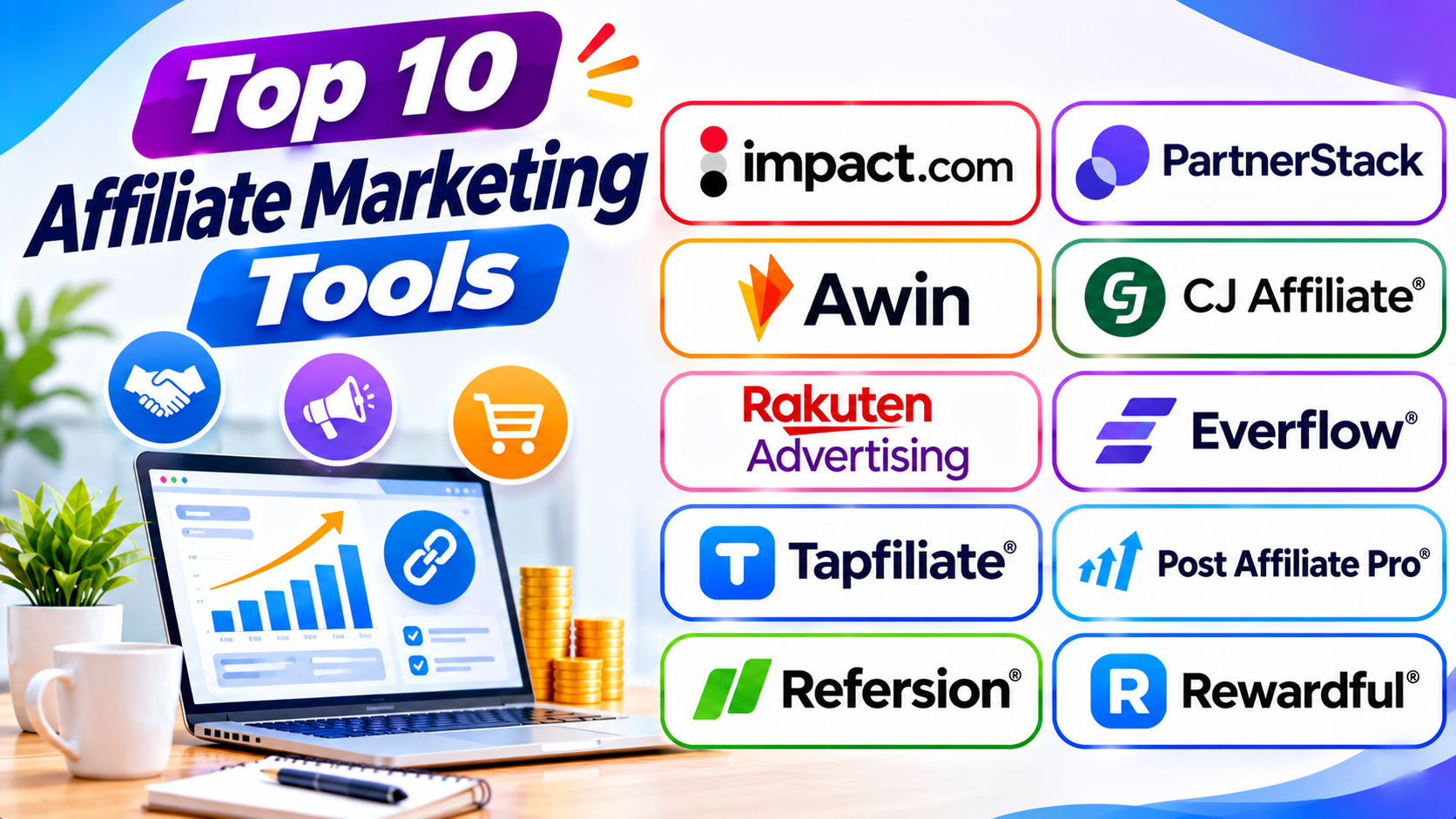
This guide covers ten popular affiliate marketing tools. You will learn about their features, strengths, and drawbacks. A comparison table and buying guide will also help you choose the right platform.
What Are Affiliate Marketing Tools?
Affiliate marketing tools are software platforms that help businesses run affiliate programs. They track referrals and connect sales with the partners who generated them.
These tools can support both advertisers and affiliates. Advertisers use them to manage partners and commissions. Affiliates use tracking and link tools to promote products and measure results.
For example, an online store may work with several bloggers. Each blogger gets a unique tracking link. When a customer buys through that link, the platform records the sale.
The business can then calculate the partner’s commission.
Affiliate marketing tools can help businesses:
- Create and manage affiliate programs.
- Find publishers and marketing partners.
- Generate unique tracking links.
- Track clicks, leads, and sales.
- Calculate affiliate commissions.
- Manage partner accounts.
- Automate payments.
- Detect suspicious traffic.
- Measure campaign performance.
- Create reports and dashboards.
Some platforms also provide access to existing affiliate networks. Others help businesses run private programs with their own partners.
Types of Affiliate Marketing Tools
Affiliate marketing software comes in different forms. Understanding these types helps you choose the right solution.
1. Affiliate Network Platforms
Affiliate networks connect advertisers with publishers. Businesses can use these networks to reach partners who already promote products.
Awin, CJ Affiliate, and Rakuten Advertising belong to this group.
2. Affiliate Tracking Software
Tracking software records clicks, leads, and sales. It helps businesses understand which partners bring results.
Everflow, Tapfiliate, and Post Affiliate Pro offer these features.
3. Partner Management Platforms
Partner management platforms help businesses manage affiliate relationships. They can support onboarding, commissions, reporting, and payments.
impact.com and PartnerStack offer wider partnership management features.
4. Ecommerce Affiliate Tools
These tools help online stores run affiliate programs. They often support product links, discount codes, sales tracking, and commission payments.
Refersion and Tapfiliate are useful examples.
Top 10 Affiliate Marketing Tools
1. impact.com
impact.com is a partnership management platform for businesses of different sizes. It helps companies manage affiliates, influencers, referral partners, and other business relationships.
The platform brings partner discovery, tracking, and campaign management together. Businesses can use it to manage partner activity from one place.
impact.com also supports commission rules and payment workflows. Teams can review partner performance and understand which relationships create value.
Its reporting tools help businesses measure clicks, conversions, and revenue. This makes it useful for companies with several types of partnership programs.
Key Features
- Affiliate and partner discovery.
- Partner relationship management.
- Tracking and attribution.
- Commission management.
- Automated payment workflows.
- Campaign reporting and analytics.
- Fraud and compliance support.
- Support for multiple partner types.
Pros
- Supports different partnership models.
- Offers detailed tracking and reporting.
- Helps automate commission workflows.
- Supports large affiliate programs.
- Brings partner activities into one system.
Cons
- The platform may feel complex for beginners.
- Pricing may not suit small businesses.
- Setup can require time and planning.
- Some advanced features may need training.
Best For: Large businesses, agencies, and brands managing several partner programs.
2. PartnerStack
PartnerStack helps software companies build and manage partner programs. It focuses on B2B partnerships, including affiliates, referral partners, and resellers.
The platform helps businesses find partners and manage their activities. Teams can organize applications, track referrals, and review partner performance.
PartnerStack also supports commission management and payouts. This helps software companies reward partners for successful referrals.
Its partner marketplace can help businesses connect with potential partners. This makes it useful for companies that want to grow through business partnerships.
Key Features
- B2B partner management.
- Affiliate and referral program support.
- Partner discovery marketplace.
- Referral tracking.
- Commission management.
- Partner onboarding.
- Automated payout workflows.
- Performance reporting.
Pros
- Designed for B2B partnerships.
- Helps manage different partner types.
- Supports partner discovery.
- Offers commission tracking.
- Provides useful partner reports.
Cons
- May not suit every ecommerce business.
- Pricing depends on program needs.
- Setup can take time.
- Advanced workflows may need training.
Best For: SaaS companies, software brands, and B2B businesses.
3. Awin
Awin is a global affiliate marketing network. It connects advertisers with publishers who promote products and services.
Businesses can use Awin to reach bloggers, content publishers, comparison websites, and other partners. This can help brands expand their marketing reach.
Awin offers tracking and reporting tools. Advertisers can review partner activity and measure campaign performance.
The platform also supports partner discovery and campaign management. This makes it useful for companies that want access to an established publisher network.
Key Features
- Global affiliate network.
- Advertiser and publisher connections.
- Affiliate tracking.
- Campaign management.
- Partner discovery.
- Performance reporting.
- Commission management.
- Tools for international campaigns.
Pros
- Provides access to a large publisher network.
- Supports international campaigns.
- Offers partner discovery features.
- Helps track affiliate performance.
- Supports different business sectors.
Cons
- Publisher approval can take time.
- Network fees may affect campaign costs.
- Results depend on partner quality.
- New advertisers may need time to learn the platform.
Best For: Retail brands, online stores, and businesses seeking a wide publisher network.
4. CJ Affiliate
CJ Affiliate is an established affiliate marketing network. It connects advertisers with publishers across many industries.
The platform helps brands create affiliate campaigns and manage publisher relationships. Businesses can work with content publishers, review websites, and other marketing partners.
CJ Affiliate provides tracking and reporting tools. These help advertisers measure clicks, sales, and partner performance.
Its tools also support campaign optimization. Brands can review results and improve their affiliate strategies.
Key Features
- Advertiser and publisher network.
- Affiliate campaign management.
- Conversion tracking.
- Commission management.
- Publisher discovery.
- Performance reporting.
- Deep linking tools.
- Campaign optimization features.
Pros
- Offers access to many publishers.
- Supports established affiliate programs.
- Provides detailed campaign reports.
- Helps manage publisher relationships.
- Supports different marketing categories.
Cons
- Approval processes may take time.
- New users may need training.
- Network costs can affect smaller programs.
- Results depend on suitable publisher partnerships.
Best For: Established brands, retailers, and companies that want network-based affiliate marketing.
5. Rakuten Advertising
Rakuten Advertising offers affiliate marketing and digital advertising services. Its affiliate network connects brands with publishers and marketing partners.
Businesses can use the platform to manage affiliate relationships. It also provides tracking and reporting tools for campaign performance.
Rakuten Advertising supports partner discovery and campaign management. Brands can use its network to reach publishers in different markets.
Its services can suit companies that want a managed approach to affiliate marketing. Businesses should review its current platform features and service options before choosing it.
Key Features
- Affiliate publisher network.
- Advertiser and publisher management.
- Conversion tracking.
- Campaign reporting.
- Partner discovery.
- Commission management.
- International marketing support.
- Partnership performance insights.
Pros
- Offers access to an established network.
- Supports global affiliate campaigns.
- Helps manage publisher relationships.
- Provides tracking and reporting.
- Serves established brands and retailers.
Cons
- May not suit very small businesses.
- Costs can vary by program.
- Network setup may take time.
- Some features may require account support.
Best For: Established retailers, global brands, and businesses seeking affiliate network access.
6. Everflow
Everflow is a partnership tracking and management platform. It helps businesses manage affiliate campaigns and measure partner performance.
The platform supports tracking across different traffic sources. Teams can review clicks, conversions, and other campaign events.
Everflow also offers reporting and fraud prevention features. These tools help businesses monitor campaign quality and find unusual activity.
Its integrations and automation features can support larger affiliate programs. Businesses can use it to manage several campaigns from one dashboard.
Key Features
- Affiliate and partner tracking.
- Real-time reporting.
- Conversion attribution.
- Partner management.
- Fraud detection tools.
- Campaign automation.
- Custom reports.
- Integrations and postback tracking.
Pros
- Offers detailed tracking features.
- Supports high-volume campaigns.
- Provides real-time reporting.
- Helps monitor suspicious activity.
- Supports different partnership models.
Cons
- Advanced features may take time to learn.
- Pricing may not suit small teams.
- Setup can require technical knowledge.
- Large dashboards may feel complex to new users.
Best For: Affiliate networks, performance marketing agencies, and businesses running large campaigns.
7. Tapfiliate
Tapfiliate helps businesses create and manage their own affiliate programs. It supports companies that want to work directly with affiliates.
The platform provides tools for affiliate registration, tracking links, and commission management. Businesses can use it to manage partners without joining a large affiliate network.
Tapfiliate also supports ecommerce and subscription businesses. Its integrations can help connect affiliate activity with online sales.
Teams can review clicks, referrals, and commissions through its dashboard. This makes it useful for companies that want a straightforward affiliate program.
Key Features
- Affiliate program creation.
- Affiliate registration and management.
- Tracking links and referrals.
- Commission management.
- Ecommerce integrations.
- Recurring commission support.
- Affiliate dashboards.
- Performance reporting.
Pros
- Simple affiliate program setup.
- Supports ecommerce businesses.
- Offers useful tracking features.
- Helps manage affiliate commissions.
- Supports recurring commission models.
Cons
- Some advanced needs may require integrations.
- Pricing depends on the selected plan.
- Large programs may need more customization.
- Teams should check tracking limits before choosing a plan.
Best For: Small and medium-sized businesses, ecommerce stores, and SaaS companies.
8. Post Affiliate Pro
Post Affiliate Pro is affiliate management software for businesses that want to run their own programs. It helps companies track affiliate activity and manage commissions.
The platform supports different tracking methods. Businesses can use it to record clicks, sales, and other referral actions.
Post Affiliate Pro also offers affiliate management and reporting tools. Teams can create commission rules and review partner performance.
Its customization options can help businesses build programs that match their needs. It may suit companies that want more control over affiliate operations.
Key Features
- Affiliate tracking.
- Affiliate account management.
- Commission rules.
- Multiple tracking methods.
- Campaign management.
- Affiliate dashboards.
- Performance reports.
- Integration options.
Pros
- Offers flexible tracking options.
- Supports custom commission rules.
- Helps manage affiliate accounts.
- Provides useful reporting features.
- Supports different business models.
Cons
- The interface may feel complex to some users.
- Setup can require technical knowledge.
- Customization may take time.
- Some integrations need extra work.
Best For: Businesses that want customizable affiliate management software.
9. Refersion
Refersion is affiliate and influencer marketing software with a strong focus on ecommerce. It helps online stores manage affiliate partners and track sales.
The platform supports affiliate registration and tracking links. Businesses can also use discount codes to connect sales with specific partners.
Refersion provides tools for commission management and reporting. These features help ecommerce teams understand which affiliates generate sales.
Its integrations support popular online store systems. This makes it useful for brands that want to connect affiliate marketing with their existing sales process.
Key Features
- Affiliate program management.
- Affiliate registration.
- Tracking links and coupon codes.
- Sales and conversion tracking.
- Commission management.
- Ecommerce integrations.
- Affiliate dashboards.
- Campaign reporting.
Pros
- Built for ecommerce affiliate programs.
- Supports coupon-based tracking.
- Helps manage affiliate partners.
- Offers useful sales reports.
- Connects with online store platforms.
Cons
- May not suit every B2B program.
- Pricing and transaction fees need review.
- Advanced needs may require integrations.
- Features vary by plan.
Best For: Ecommerce brands, Shopify stores, and online retailers.
10. Rewardful
Rewardful helps SaaS companies manage affiliate and referral programs. It is designed for businesses that want to reward partners for bringing new customers.
The platform supports recurring commissions and subscription-based businesses. This can help software companies reward affiliates for ongoing customer payments.
Rewardful connects with supported payment and business systems. Teams can use it to track referrals and manage partner commissions.
Its dashboard helps businesses review affiliate activity. This makes it useful for SaaS companies that want a simple way to manage referral partnerships.
Key Features
- Affiliate program management.
- Referral tracking.
- Recurring commission support.
- Affiliate dashboards.
- Coupon and link tracking.
- Payment system integrations.
- Commission management.
- Program reporting.
Pros
- Designed for SaaS businesses.
- Supports recurring commissions.
- Helps track customer referrals.
- Offers a simple affiliate workflow.
- Connects with supported payment systems.
Cons
- Less suitable for large publisher networks.
- Focuses mainly on SaaS and subscription models.
- Advanced enterprise needs may require another platform.
- Integration options depend on supported systems.
Best For: SaaS startups, subscription businesses, and software companies.
Comparison Table: Top 10 Affiliate Marketing Tools
| Tool | Main Strength | Best Use | Suitable For |
|---|---|---|---|
| impact.com | Partnership management | Multiple partner programs | Large businesses |
| PartnerStack | B2B partner programs | SaaS affiliate growth | Software companies |
| Awin | Publisher network | Global affiliate campaigns | Retail brands |
| CJ Affiliate | Affiliate network | Publisher partnerships | Established brands |
| Rakuten Advertising | Network-based marketing | Retail and global campaigns | Large companies |
| Everflow | Advanced tracking | High-volume campaigns | Networks and agencies |
| Tapfiliate | Self-managed programs | Affiliate tracking | Small and medium businesses |
| Post Affiliate Pro | Custom affiliate management | Flexible tracking and commissions | Growing businesses |
| Refersion | Ecommerce affiliate management | Store sales and coupon tracking | Online retailers |
| Rewardful | SaaS referrals | Recurring commissions | SaaS companies |
How to Choose the Right Affiliate Marketing Tool
The right tool depends on your business model. A small online store may need simple tracking. A large company may need a full partnership management system.
Use these points to compare your options.
1. Understand Your Business Model
First, decide how you plan to use affiliate marketing.
Do you run an online store? Do you sell software subscriptions? Do you manage an affiliate network?
Choose a tool that supports your business model.
2. Check Affiliate Tracking
Accurate tracking is important. The platform should record clicks, referrals, leads, and sales.
Also check how it handles tracking across devices and different customer journeys.
3. Review Commission Options
Different programs use different commission rules. Some pay a fixed amount, while others pay a percentage of each sale.
SaaS companies may need recurring commissions. Choose a platform that supports your payment model.
4. Check Partner Discovery
Some tools offer access to existing publisher networks. Others help you manage partners you recruit yourself.
Choose a network if you need publisher reach. Choose management software if you already have partners.
5. Compare Payment Features
Affiliate payments can become difficult as programs grow. Look for tools that calculate commissions and support payment workflows.
Check supported currencies and payment methods before signing up.
6. Review Fraud Protection
Fraudulent clicks and false conversions can waste money. Look for tools that help identify unusual traffic and suspicious activity.
Also review how the platform handles disputed transactions.
7. Check Integrations
Your affiliate tool may need to connect with an online store, payment system, or customer management platform.
Check supported integrations before choosing a plan.
8. Compare Reports and Analytics
Reports help you understand campaign performance. Look for clear data on clicks, conversions, sales, and commissions.
Choose a platform that makes important results easy to review.
9. Consider Your Budget
Compare subscription costs, network fees, and transaction charges. A low starting price may not include every feature.
Review the full cost before making a decision.
10. Test Ease of Use
A good platform should make daily work easier. Try a demo or free trial when available.
Test the main features with your team before buying.
Common Mistakes to Avoid When Using Affiliate Marketing Tools
Affiliate tools can make campaign management easier. But poor planning can still lead to weak results.
1. Choosing a Tool Without Clear Goals
Do not select software just because it offers many features. First, decide what you want to achieve.
Your goals may include more sales, new leads, or stronger partner relationships.
2. Ignoring Tracking Accuracy
Incorrect tracking can create commission disputes. Test links and conversion tracking before launching your program.
Check reports often to find unusual results.
3. Setting Unclear Commission Rules
Affiliates need clear payment terms. Explain commission rates, payment dates, refund rules, and eligible sales.
Put these terms in writing.
4. Failing to Review Affiliate Quality
Not every partner suits your business. Review their content, audience, and marketing methods.
Work with partners who reach the right customers.
5. Ignoring Fraud Prevention
Some traffic sources may create false clicks or sales. Use available fraud checks and review unusual activity.
Do not approve suspicious commissions without checking them.
6. Forgetting Mobile Tracking
Many customers browse and buy through mobile devices. Check whether your tracking setup supports your customers’ buying journeys.
7. Paying for Unused Features
Large platforms offer many tools. But smaller businesses may not need every feature.
Choose a plan that matches your real needs.
8. Ignoring Affiliate Communication
Partners need clear updates and support. Share campaign details, product information, and useful promotional materials.
Good communication can improve partner performance.
9. Measuring Only Clicks
Clicks do not always create sales. Track conversions, revenue, refunds, and other useful results.
10. Failing to Review Campaign Results
Review your reports regularly. Find your strongest partners and campaigns.
Use these insights to improve future results.
Questions and Answers About Affiliate Marketing Tools
1. What are affiliate marketing tools?
Affiliate marketing tools help businesses run and track affiliate programs. They support partner management, referral tracking, commission calculations, and reports.
2. Why do businesses use affiliate marketing tools?
Businesses use these tools to manage partners and track sales. They also help reduce manual work and improve campaign reporting.
3. Which affiliate marketing tool is best overall?
impact.com offers broad partnership management features. However, the best choice depends on your business size, goals, and budget.
4. Which affiliate marketing tool is best for SaaS companies?
PartnerStack and Rewardful support SaaS partnership programs. They help software businesses manage referrals and affiliate commissions.
5. Which tool is best for ecommerce businesses?
Refersion and Tapfiliate offer useful ecommerce affiliate features. GRIN is not included here because it focuses more broadly on creator marketing.
6. What is an affiliate network?
An affiliate network connects advertisers with publishers. It helps businesses find partners who can promote their products and services.
7. What is affiliate tracking software?
Affiliate tracking software records clicks, referrals, and sales. It helps businesses identify which partners generate results.
8. Can affiliate marketing tools prevent fraud?
Some platforms offer fraud detection and traffic monitoring. These features help identify unusual clicks and suspicious conversions.
9. Can affiliate marketing tools automate payments?
Many platforms support commission calculations and payment workflows. Available payment options depend on the provider and plan.
10. What is the difference between an affiliate network and affiliate software?
An affiliate network connects brands with existing publishers. Affiliate software helps businesses manage their own partner programs.
11. Do affiliate marketing tools support recurring commissions?
Some platforms support recurring commissions. Rewardful and other SaaS-focused tools can help businesses reward partners for subscription revenue.
12. Can small businesses use affiliate marketing tools?
Yes. Small businesses can use tools such as Tapfiliate and Rewardful. They should compare features and costs before choosing.
13. How do affiliate links work?
An affiliate link contains tracking information for a partner. When a customer clicks and completes a tracked action, the platform records the referral.
14. What should businesses check before choosing affiliate software?
Review tracking, commission rules, payment options, integrations, and reports. Also check pricing, support, and ease of use.
15. Are affiliate marketing tools free?
Some tools offer free trials or limited plans. Most full affiliate management platforms charge for subscriptions or usage.
Final Thoughts
Affiliate marketing can help businesses reach new customers through trusted partners. The right software makes it easier to manage these relationships.
impact.com supports wider partnership programs. PartnerStack focuses on B2B growth. Awin, CJ Affiliate, and Rakuten Advertising connect brands with publisher networks.
Everflow offers advanced tracking. Tapfiliate and Post Affiliate Pro help businesses run their own programs. Refersion supports ecommerce brands, while Rewardful serves SaaS businesses.
Each platform has a different purpose. No single tool works best for every company.
Start with your business model and campaign goals. Then compare tracking, commissions, payments, integrations, and reports.
Choose a platform that fits your needs today. Make sure it can also support your growth.