Introduction
APIs help software systems share data and work together. Businesses use APIs to connect apps, websites, services, and other tools. As these connections grow, teams need a clear way to manage them.
API management platforms help teams control this work. They help publish, secure, monitor, and manage APIs. They also help teams track how people and apps use their services.
A good platform can make API work easier to manage. It can also help protect important business data. Some platforms focus on cloud services. Others support large companies with complex systems.
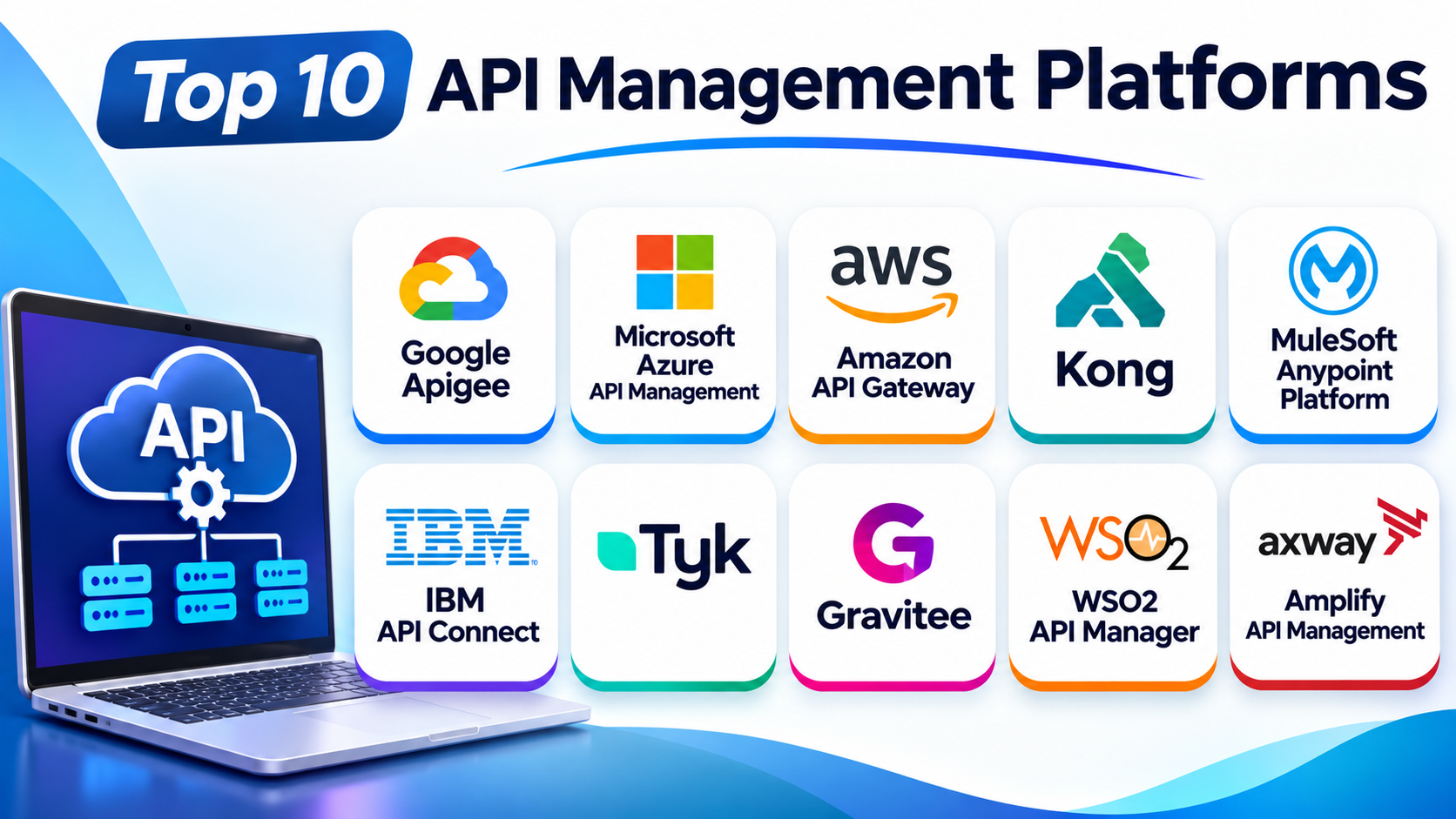
In this guide, we explore ten popular API management platforms. You will learn about their main features, Pros, Cons, and best uses. We also include a comparison table to help you choose.
What Is an API Management Platform?
An API management platform helps businesses manage APIs throughout their life. It supports the process of creating, publishing, securing, monitoring, and updating APIs.
It often includes an API gateway. An API gateway acts like a security gate between users and services. It checks requests and controls how they reach the right system.
Many platforms also provide developer portals. These portals help developers find and understand available APIs. Other features can include access rules, usage reports, traffic limits, and performance tracking.
API management helps teams keep their services organized. It also supports safer connections between different software systems.
Top 10 API Management Platforms
1. Google Apigee
Best for: Enterprise API management and cloud-based services
Google Apigee is an API management platform from Google Cloud. It helps businesses create, secure, publish, and monitor APIs. It also provides tools for managing API traffic.
Apigee helps teams control how users and applications access their APIs. Businesses can set security rules and manage traffic limits. They can also review API activity through analytics.
The platform supports API products and developer portals. These features help companies share APIs with partners and customers. It also supports hybrid environments, which can help businesses manage services across different locations.
Apigee suits large organizations that need strong API control. It can also help companies build services around their business data.
Key Features
- API gateway and traffic management.
- API security and access control.
- API analytics and usage reports.
- Developer portal support.
- API publishing and lifecycle management.
- Cloud and hybrid deployment options.
Pros
- Offers broad API management features.
- Supports large business environments.
- Provides useful traffic and usage reports.
- Helps manage API access and security.
- Works well with Google Cloud services.
Cons
- New users may need time to learn it.
- Advanced features can increase costs.
- Setup may need skilled technical teams.
- May feel complex for small projects.
2. Microsoft Azure API Management
Best for: Businesses using Microsoft Azure
Microsoft Azure API Management helps organizations publish and manage APIs. It provides tools for securing API access and controlling traffic.
The platform connects APIs with different applications and services. Teams can create policies for access, usage, and request handling. They can also use its developer portal to share API details.
Azure API Management supports cloud and hybrid environments. This gives businesses options when they manage services in different locations.
Companies that already use Microsoft Azure may find it a natural choice. It can help them manage APIs across business applications and cloud services.
Key Features
- API gateway and policy management.
- Access control and security tools.
- Developer portal.
- API analytics and monitoring.
- API version management.
- Support for cloud and hybrid setups.
Pros
- Works closely with Microsoft Azure.
- Offers useful API security controls.
- Supports API publishing and management.
- Provides analytics and monitoring tools.
- Suits large business environments.
Cons
- The range of features can feel complex.
- Costs depend on the selected service tier.
- Azure knowledge can help with setup.
- Some advanced options need careful planning.
3. Amazon API Gateway
Best for: Businesses building services on AWS
Amazon API Gateway is a managed service from Amazon Web Services. It helps businesses create and manage APIs for their applications.
The platform receives API requests and sends them to the right services. It also supports access controls and traffic management. This helps businesses manage connections between their apps and cloud systems.
Amazon API Gateway works with other AWS services. Teams can use it with serverless applications and cloud-based systems. It also provides tools for monitoring API activity.
This platform suits businesses that already use AWS. It can help teams manage APIs without running their own gateway servers.
Key Features
- Managed API gateway service.
- API request routing.
- Access control and security options.
- Traffic management.
- Monitoring and usage tracking.
- Integration with AWS services.
Pros
- Works closely with AWS services.
- Reduces gateway server management.
- Supports cloud-based applications.
- Offers traffic and access controls.
- Can suit serverless projects.
Cons
- Works best within the AWS environment.
- Costs can grow with API usage.
- Advanced setup may need AWS knowledge.
- Large API projects need careful management.
4. Kong API Management
Best for: Cloud-native and multi-cloud API environments
Kong provides API gateway and management tools for modern software systems. It helps teams manage API traffic across different services.
The platform supports security, traffic control, and API routing. It also offers plugins that help teams add extra features. These can support authentication, monitoring, and request handling.
Kong works with cloud-based and self-managed environments. This gives businesses more control over where they run their API services.
Kong suits teams that use containers, microservices, and cloud platforms. It can also help businesses manage APIs across several environments.
Key Features
- API gateway and traffic routing.
- Authentication and access controls.
- Plugin-based features.
- API analytics and monitoring.
- Cloud and self-managed options.
- Support for modern application environments.
Pros
- Offers flexible deployment choices.
- Supports cloud-native systems.
- Provides many useful plugins.
- Helps manage API traffic.
- Works well with microservice environments.
Cons
- Advanced setup can be technical.
- Some enterprise features require paid plans.
- Plugin management needs care.
- Beginners may need training.
5. MuleSoft Anypoint Platform
Best for: Enterprise integration and API management
MuleSoft Anypoint Platform helps businesses connect applications, data, and services. It combines API management with wider integration tools.
Companies often use many separate software systems. MuleSoft helps connect these systems through APIs. This can reduce the need for separate connections between every application.
The platform supports API design, management, security, and monitoring. It also provides tools for managing integrations across business systems.
MuleSoft suits large organizations with complex technology needs. It can help teams connect older systems with newer cloud applications.
Key Features
- API design and management.
- Application and data integration.
- API security and access control.
- Monitoring and analytics.
- Developer tools and portals.
- Support for hybrid environments.
Pros
- Combines API management with integration.
- Suits large business systems.
- Helps connect different applications.
- Offers broad lifecycle management.
- Supports complex integration needs.
Cons
- Can be expensive for smaller businesses.
- The platform has a learning curve.
- Setup may need specialist knowledge.
- Large projects need careful planning.
6. IBM API Connect
Best for: Large organizations with complex API needs
IBM API Connect helps businesses create, manage, secure, and share APIs. It provides tools for handling APIs across their full lifecycle.
The platform includes an API gateway and management tools. These help teams control access and manage API traffic. It also offers analytics and developer portal features.
IBM API Connect supports different deployment needs. Businesses can use it in cloud, on-premises, and hybrid environments, depending on their setup.
The platform suits organizations that need strong governance. Governance means setting clear rules for how teams create and manage APIs.
Key Features
- API lifecycle management.
- API gateway and security tools.
- Developer portal.
- API analytics.
- Access and policy management.
- Cloud and on-premises deployment options.
Pros
- Offers broad enterprise features.
- Supports different deployment models.
- Helps manage API security.
- Provides developer portal tools.
- Supports API governance.
Cons
- May be complex for small teams.
- Setup can need specialist support.
- Pricing may not suit small businesses.
- Teams may need training.
7. Tyk
Best for: Flexible API management and open-source gateway use
Tyk is an API management platform with gateway and management tools. It helps businesses secure, monitor, and control API traffic.
The platform supports access policies and traffic limits. It also provides analytics that help teams understand API usage. Businesses can use it to manage APIs across cloud and self-managed environments.
Tyk offers an open-source gateway option. This can appeal to teams that want more control over their API infrastructure.
The platform suits businesses that need flexible deployment choices. It can also work well for teams that want to manage APIs across different environments.
Key Features
- API gateway.
- Access control and security policies.
- Traffic limits and request management.
- API analytics.
- Cloud and self-managed deployment options.
- Developer portal support.
Pros
- Offers flexible deployment options.
- Provides an open-source gateway.
- Helps control API traffic.
- Includes useful monitoring tools.
- Supports different business environments.
Cons
- Advanced features may need technical skills.
- Setup can take time.
- Enterprise options may increase costs.
- Teams need to manage configuration carefully.
8. Gravitee
Best for: API and event management
Gravitee provides tools for managing APIs and event-based services. It helps businesses control how applications and services communicate.
The platform includes an API gateway and management features. Teams can use it to manage access, traffic, and API activity. It also supports event-driven systems.
Event-driven systems share information when something happens. For example, a shopping system may send an update when a customer places an order.
Gravitee suits businesses that manage both APIs and event-based connections. It can help teams keep these services under one management approach.
Key Features
- API gateway.
- API access and security controls.
- Traffic management.
- API monitoring and analytics.
- Event management features.
- Cloud and self-managed deployment options.
Pros
- Supports API and event management.
- Offers flexible deployment choices.
- Helps manage API traffic.
- Provides security and monitoring tools.
- Suits event-driven applications.
Cons
- Advanced features may need technical skills.
- Some enterprise features cost extra.
- Setup can take time.
- Smaller teams may not need every feature.
9. WSO2 API Manager
Best for: Open-source and customizable API management
WSO2 API Manager helps businesses design, publish, secure, and monitor APIs. It provides tools for managing APIs across their lifecycle.
The platform includes an API gateway and developer portal. Teams can use it to control API access and manage traffic. It also supports API policies and usage reports.
WSO2 offers open-source options and enterprise services. This gives businesses more choice when planning their API setup.
The platform can support cloud, on-premises, and hybrid environments. It suits organizations that want flexibility and more control over their systems.
Key Features
- API lifecycle management.
- API gateway and security controls.
- Developer portal.
- API analytics and monitoring.
- Policy and access management.
- Cloud and self-managed deployment options.
Pros
- Offers an open-source option.
- Supports flexible deployment.
- Provides broad API management tools.
- Helps manage API access and security.
- Supports custom business needs.
Cons
- Setup may need technical knowledge.
- Customization can take time.
- New users may need training.
- Large deployments need careful management.
10. Axway Amplify API Management
Best for: Managing APIs across multiple gateways and environments
Axway Amplify API Management helps businesses manage APIs across different systems. It supports API discovery, security, governance, and monitoring.
Large organizations may use several API gateways. These gateways can come from different providers. Axway Amplify helps teams gain a clearer view of APIs across these environments.
The platform also supports API sharing and developer access. This helps teams and partners find and use approved APIs.
Axway Amplify suits companies with complex API environments. It can help businesses manage APIs across cloud, on-premises, and hybrid systems.
Key Features
- API discovery and management.
- API security and governance.
- API monitoring and analytics.
- Developer portal and API sharing.
- Multi-gateway management.
- Support for hybrid environments.
Pros
- Helps manage APIs across different gateways.
- Supports large business environments.
- Provides API discovery tools.
- Helps improve API governance.
- Supports hybrid deployments.
Cons
- May be more than small teams need.
- Setup can require planning.
- Advanced management features may need training.
- Pricing may require a business quote.
Comparison Table: Top 10 API Management Platforms
| Platform | Main Strength | Deployment Options | Best For |
|---|---|---|---|
| Google Apigee | Full API lifecycle management | Cloud and hybrid | Enterprise API programs |
| Azure API Management | Microsoft cloud integration | Cloud and hybrid | Azure-based businesses |
| Amazon API Gateway | Managed API gateway | AWS cloud | AWS applications |
| Kong | Flexible API gateway | Cloud and self-managed | Cloud-native teams |
| MuleSoft Anypoint Platform | API and application integration | Cloud and hybrid | Enterprise integration |
| IBM API Connect | API governance and security | Cloud, on-premises, and hybrid | Large organizations |
| Tyk | Flexible gateway management | Cloud and self-managed | Open-source-focused teams |
| Gravitee | API and event management | Cloud and self-managed | Event-driven applications |
| WSO2 API Manager | Open-source API management | Cloud, on-premises, and hybrid | Custom API environments |
| Axway Amplify | Multi-gateway API management | Cloud and hybrid | Large multi-gateway systems |
How to Choose the Best API Management Platform
Choosing an API management platform depends on your business needs. Some companies need a simple gateway. Others need full API lifecycle management.
Consider these points before making a choice.
1. Understand Your API Needs
First, list the APIs your business uses. Check whether you need public, private, or partner APIs. This helps you find a platform that fits your work.
2. Check Security Features
API security should be a main concern. Look for access controls, authentication, and traffic protection. These features help prevent unwanted access.
3. Review Deployment Options
Some platforms run mainly in the cloud. Others support on-premises and hybrid setups. Choose a model that fits your systems and business rules.
4. Check Monitoring Tools
Good monitoring helps teams understand API activity. Look for usage reports, traffic details, and performance tracking. These tools can help find problems early.
5. Review Developer Portal Features
A developer portal helps people find and understand APIs. It can also support API access requests and documentation. This is useful when partners or outside developers use your APIs.
6. Consider Growth
Your API needs may grow as your business expands. Choose a platform that can handle more users and traffic. Also check how easily it supports new APIs.
7. Compare Pricing
API management costs can depend on usage, features, and deployment choices. Review the full pricing model. Also check support costs and extra service fees.
8. Check Team Skills
Some platforms need more technical knowledge than others. Choose a tool your team can manage. Training and support may also help.
Common Uses of API Management Platforms
API management platforms support many business activities. They help teams connect services and control data sharing.
Here are some common uses:
Application Integration: Businesses connect different applications so they can share information.
Mobile App Services: Mobile apps use APIs to access accounts, products, payments, and other services.
E-commerce Systems: Online stores connect product details, orders, payments, and delivery services.
Partner Connections: Companies share selected business services with partners through controlled APIs.
Cloud Services: Teams manage connections between cloud applications and other systems.
Customer Platforms: Businesses connect customer records, support tools, and account services.
Data Sharing: Organizations allow approved systems to access selected business information.
Microservices: Development teams manage connections between smaller services that work together.
Questions and Answers
1. What is an API management platform?
An API management platform helps businesses create, publish, secure, monitor, and manage APIs. It gives teams tools to control API access and usage.
2. Why do businesses need API management?
Businesses use many applications and services. API management helps these systems communicate safely. It also helps teams monitor and control API activity.
3. What is an API gateway?
An API gateway acts as a central point for API requests. It checks requests and sends them to the correct service. It can also apply security and traffic rules.
4. Which is the best API management platform?
The best platform depends on your needs. Apigee and Azure API Management suit large cloud environments. Amazon API Gateway fits AWS projects. Kong and Tyk offer flexible gateway options.
5. What is the difference between API management and an API gateway?
An API gateway handles API requests and applies traffic rules. API management covers a wider set of tasks. These include publishing, security, monitoring, version control, and developer access.
6. Are open-source API management platforms available?
Yes. Kong, Tyk, and WSO2 offer open-source options. Their features and support plans can differ.
7. Can API management platforms improve security?
Yes. They can control access and apply security policies. They can also limit traffic and help teams monitor unusual activity.
8. What is API lifecycle management?
API lifecycle management covers the full process of managing an API. It includes planning, creation, publishing, updates, monitoring, and retirement.
9. Do small businesses need API management platforms?
Some small businesses need API management when they connect many services. Others may only need a basic gateway. The right choice depends on the number and type of APIs they use.
10. What should I check before choosing an API management platform?
Check security, deployment options, monitoring, developer tools, pricing, and growth support. Also make sure the platform fits your team’s skills.
Final Thoughts
API management helps businesses connect software systems in a safer and more organized way. The right platform can make API work easier to control. It can also help teams manage traffic, protect data, and track usage.
Google Apigee and Azure API Management offer broad tools for large organizations. Amazon API Gateway suits businesses that use AWS. Kong and Tyk offer flexible gateway options. MuleSoft and IBM API Connect support wider enterprise needs.
Gravitee and WSO2 provide other flexible choices. Axway Amplify can help businesses manage APIs across several gateways.
There is no single platform that suits every business. Compare your needs, team skills, security rules, and budget before choosing. Start with a clear plan and select a platform that can grow with your business.